INTRODUCTION
The use of crystal meth, a potent variant of methamphetamine, represents a significant public health issue, severely impacting users, their families, and the broader social environment. Methamphetamine use has risen dramatically worldwide, with the United Nations Office on Drugs and Crime ([UNODC], 2023) reporting it as one of the most used synthetic drugs, affecting millions worldwide. According to the Basic Community Study (Estudio Básico de Comunidad Objetivo (Spanish acronym EBCO, 2018), .9% of the Mexican population aged 12 to 65 uses methamphetamines, making it the third most widely consumed illegal drug. Despite the global urgency of addressing methamphetamine use, it is essential to understand its localized impact in Mexico, where structural and cultural factors, such as economic disparities, limited access to healthcare, and social stigma, exacerbate the problem.
Crystal meth is highly addictive, affordable, and easily accessible (National Institute on Drug Abuse [NIDA], 2023; Winslow et al., 2007), leading to rapid addiction and almost immediate negative consequences. The impact of crystal meth extends to the user’s family and social environment, exacerbating domestic violence and familial conflicts, especially in close relationships (Semple et al., 2009; Sommers et al., 2006). Some studies have found that meth use not only affects users, but also their families, extending stigma to them as well, which not only affects the user’s environment but also increases their marginalization and legal problems (Sampson et al., 2023). Additionally, children exposed to environments where crystal meth is consumed are at greater risk of developmental problems (Lineberry & Bostwick, 2006), particularly when consumption occurs during pregnancy (Dinger et al., 2017). One study revealed that young people exposed to familial crystal meth use are likely to begin using the drug at an early age, with many being introduced to it by family members (Chomchoei et al., 2019). Crystal meth use is also linked to increased involvement in criminal activities, including theft and violent crimes (McKetin et al., 2020).
Other studies detail the devastating consequences of crystal meth use, highlighting the interconnectedness of social, psychological, and emotional impacts. Users experienced significant physical and mental health issues, including malnutrition, paranoia, psychosis, and cardiovascular problems (O’Brien et al., 2008), as well as the loss of significant family relationships during the active period of consumption and recovery (Vandermause, 2012).
At the same time, cognitive and physical effects of crystal meth use include cognitive impairment, cardiovascular problems, liver and kidney damage, and a high risk of relapse. Users experience a rush or rapid onset of euphoria, heightened libido, increased energy and attention, together with appetite suppression, insomnia, and skin lesions (Watanabe-Galloway et al., 2009). Long-term use can result in irreversible neurological damage, cardiac issues, and psychiatric conditions such as anxiety, depression, psychosis, and suicidal ideation (Meredith et al., 2005; Winslow et al., 2007).
Abrupt cessation of crystal meth use triggers acute withdrawal syndrome characterized by symptoms such as anxiety, fatigue, intense cravings, and sleep disturbance, which can persist for up to four weeks. Factors such as frequent use, injecting drug consumption, female gender, and residential treatment exacerbate these symptoms (Mancino et al., 2011; Zhao et al., 2021). Despite its severe consequences, fewer than 20% of users receive treatment, and only 27% of women using drugs receive care (UNODC, 2023).
Although there are numerous quantitative studies on the effects of methamphetamine use, few adopt a qualitative perspective or include insights from family members or professionals working closely with users. Examples include studies such as the one by Brookfield et al. (2022) emphasizing the nuanced trajectories of people using crystal meth. This study challenges the binary framework of addiction and recovery by exploring how individuals navigate complex social and health systems without necessarily achieving abstinence. Fockele et al. (2023) examine the shifting motivations behind crystal meth use, highlighting issues such as initial social enhancement that transitions to isolation and health crises, providing critical insights for healthcare interventions. Silverstein et al., 2021 report the self-management practices of crystal meth use among individuals with opioid dependence, underscoring its role in mitigating withdrawal symptoms and highlighting the intricate balance between perceived benefits and risks.
This qualitative approach complements understanding of the phenomenon by exploring the direct experiences and perceptions of those around users, thereby improving intervention strategies, as has been recognized in other studies (see Vandermause, 2012). The present study aims to explore the experiences related to crystal meth use from the perspective of users, their families, and healthcare professionals, to understand the meanings attributed to these experiences and their psychosocial and familial implications. By integrating these perspectives, the study seeks to enrich current knowledge, aligning prevention and treatment strategies with the actual needs of those affected, while providing a solid foundation for future research.
METHOD
Study design
The research employed a qualitative approach based on interpretative phenomenology (Smith et al., 2009), essential for delving into the lived experiences of crystal meth users, their families, and healthcare professionals. Husserl’s phenomenology (2012) further enabled the understanding of the meaning of these experiences within a broader context. The study was conducted from March 2022 to October 2023, during which in-depth interviews were conducted with those taking part.
Participants
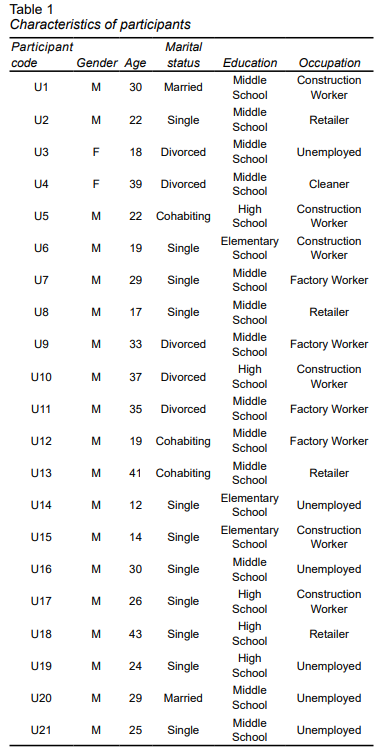
Study subjects were selected intentionally and homogeneously, following the guidelines of Smith and Osborn (2008), to represent diverse experiences related to crystal meth use. A total of twenty-one individuals (nineteen men and two women) undergoing residential treatment were interviewed. The inclusion criteria required participants to be over 18 years old, have crystal meth as their primary substance of abuse, and have provided informed consent. Comorbid health conditions related to substance use were not considered as exclusion criteria. The lower participation of women reflects their limited presence in these treatments, which are largely designed for men. Table 1 shows their main characteristics.
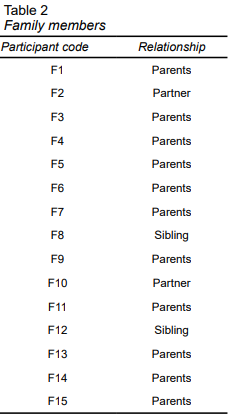
The fifteen family members interviewed were direct relatives (mothers, fathers, siblings, or partners) of those in treatment. Table 2 shows the relationship between users and their family members.
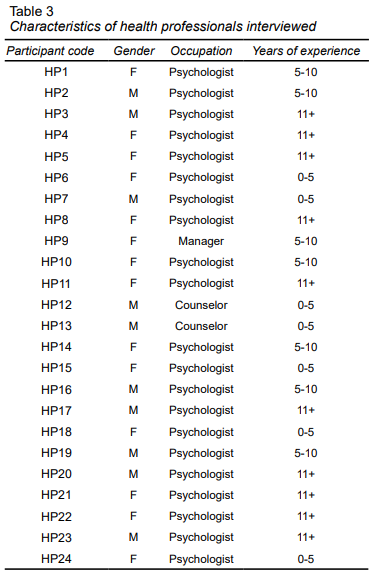
Additionally, healthcare professionals, including psychologists and therapists from the Community Mental Health and Addiction Centers (CECOSAMA) in Aguascalientes, were chosen based on their experience treating crystal meth users, providing a comprehensive perspective. Table 3 shows their main characteristics.
Data collection, procedure and techniques
Open interviews were used as the primary data collection method, targeting three key groups: crystal meth users, family members, and healthcare professionals. They were designed to obtain detailed insights and perspectives from each group on crystal meth use.
The interviews for crystal meth users covered a range of topics, starting with personal data collection, followed by an exploration of their drug use history and lived experiences related to meth use. They also investigated the physical, psychological, and social consequences of consumption, as well as the connection between drug use and suicidal ideation, through questions such as What familial and personal consequences has your use caused? The interviews also investigated the immediate and long-term effects on their daily lives and their efforts to seek care services.
For family members of crystal meth users, the interviews focused on their insights into their loved one’s substance use, their understanding of the user’s consumption history, and their experiences in seeking treatment services. Questions included What has your experience been like with a family member who uses crystal meth? and Is there a history of substance use among other family members? These topics facilitated the exploration of the impact of crystal meth use on family dynamics and the challenges of accessing treatment services.
As for healthcare professionals, the interviews focused on their clinical observations and knowledge of crystal meth use. Questions addressed the reasons behind the onset of drug use, the psychological care process provided to users, and the consequences observed in their patients. Interviews also explored barriers to accessing treatment services.
Interviews with users and family members were conducted at three residential centers in Aguascalientes, selected for their expertise in treating crystal meth users. In contrast, interviews with healthcare professionals were conducted at their workplaces, with some undertaken online.
Analysis
Interviews were audio-recorded. The subsequent data analysis followed the seven steps of Interpretative Phenomenological Analysis (IPA) (Smith et al., 2009): transcribing interviews, conducting multiple readings to become familiar with the content, and identifying significant ideas through annotations. Based on these annotations, emergent themes were generated, and their interrelationships analyzed. This process, repeated for each individual case, allowed for the identification of common patterns across the cases analyzed. Guided by the principles of Husserl’s phenomenology (2012), this approach prioritized the understanding of lived experiences and the meanings attributed to them, incorporating perspectives from users, family members, and healthcare professionals. Results were presented narratively, supported by representative quotations, enabling the structuring of interpretative categories and offering a holistic understanding of the phenomenon.
Data collection ceased once ‘data saturation’ was achieved when responses became repetitive (Strauss & Corbin, 2002). Additionally, Atlas.Ti was used to support the coding and organization of the narratives. Each transcript was imported into the software, where initial codes were identified through a detailed reading of the interviews. The codes were subsequently grouped into categories and subcategories, following the principles of interpretative phenomenology.
Data triangulation, comparing the experiences of users, family members, and professionals, reinforced the reliability of the analysis. Experts reviewed the validity of the process by evaluating the relevance of the interviews.
Ethical considerations
Before each interview, the purpose of the research was explained, and informed consent obtained. Participants were informed that their autonomy and confidentiality would be ensured and that they could withdraw their consent at any time. They were told that the information collected would be used exclusively by the research team, in keeping with the ethical standards of the Universidad Autónoma de Aguascalientes. The research protocol was approved by the Institutional Bioethics Committee of the Universidad Autónoma de Aguascalientes, with CIB-UAA-32.
RESULTS
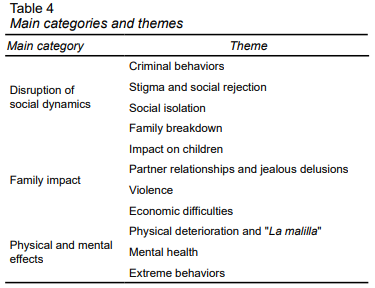
The interpretation of results was based on Husserl’s phenomenological perspective, which seeks to understand lived experiences from the point of view of participants. Interview testimonials revealed diverse perspectives on the consequences of crystal meth use in the lives of users and their relationships. The results presented here derive from the IPA conducted following the steps outlined by Smith et al. (2009), ensuring rigorous interpretation of participants’ narratives. The analysis was organized into three main categories: disruption of social dynamics, family impact, and physical and mental health effects. Table 4 shows the main categories and themes.
Disruption of social dynamics
This category examines the social impact of crystal meth use, revealing disruptions in interpersonal dynamics through isolation, stigma, and conflict. These effects, described by users, family members, and the broader social environment, weaken connections and affect both users and those around them.
Criminal behaviors
Theft is the most common criminal behavior among crystal meth users, underscoring the severity of their dependence: “I would get desperate and do whatever it took to get more drugs, I’d steal from my mom, my sister ...” (U8). Crimes range from stealing personal belongings to vehicles, from both family members and strangers: “I ended up stealing the blender from my house to pawn it for more drugs ...” (U17). These accounts demonstrate the lengths users are willing to go to maintain their drug use.
Family members and health professionals also describe the seriousness of these thefts: “He destroyed everything... material things that don’t matter, but ... the ones most hurt were us ...” (FAM). Dependency erodes family trust and creates insecurity: “It’s disappointing because ... a son, stealing from his own mother ...” (FAM).
Crystal meth use is also associated with other criminal activities, such as drug possession and carrying weapons: “I would show up with a knife and scare elderly people ... it made me really sad to prey on the weakest” (U14). Drug dealing and extortion are also common:
“They end up getting involved in other criminal activities to get crystal” (HP). Additionally, fights and even homicides were reported: “I was responsible for ... well, to put it bluntly, I was in responsible for ... taking people’s lives” (U19). These behaviors illustrate the complexity of the social and criminal ramifications linked to crystal meth use, revealing a cycle of dependency, criminal association, and participation in illegal activities to sustain their drug habit.
The physical and psychological effects of crystal meth drive criminal behaviors. The urge to avoid withdrawal syndrome, combined with cognitive impairment and disorders such as depression and anxiety, heightens desperation and impulsivity, leading users to commit theft to obtain the drug and relieve discomfort. “They are capable of stealing or borrowing under false pretenses just to get their dose and calm down ...” (PS). As a result of these crimes, crystal meth users may face severe legal consequences, such as imprisonment, profoundly impacting both their lives and those of their families.
Stigma and social rejection
Stigma and social rejection are significant consequences of crystal meth use, impacting daily life, family relationships, and reintegration processes. Users face discriminatory attitudes, ranging from contemptuous looks to workplace exclusion: “It’s not the same asking for a job when you’re thin as when you're healthy… because the drug makes you look really worn out ... ” (U16). This stigma also affects their access to and retention in treatment programs.
The impact of stigma extends beyond users to their families, who suffer from shame and isolation: “My father gets angry and says I’m giving the family a bad name ... ” (U6). Families endure additional pain from being stigmatized: “People would say, ‘Hey, they took your son in the patrol car.’ That hurt me, but I would go to the bathroom to cry and then come back as if nothing had happened” (FAM). Stigma can sever family ties and hinder access to support networks.
Stigma not only perpetuates social exclusion but also prevents access to opportunities and treatment, prolonging addiction and increasing the risk of complications: “They already come marked, labeled, categorized by the society we live in …” (HP). For women, the dual stigma of being a drug user exacerbates barriers to seeking help: “Even though there are women who use, the fact that they are labeled or carry this stigma or stereotype … means that fewer of them seek help or care …” (HP). This makes it even more challenging for women to access the necessary resources for recovery.
Social isolation
The stigma associated with crystal meth use and the resulting criminal behaviors lead to social isolation. This isolation increases marginalization, depriving users of the necessary support for rehabilitation and social reintegration. It also limits their access to healthcare services and employment, increasing their vulnerability and dependence on crystal meth. Aware of society’s negative perception, users tend to distance themselves from family and friends, leading to a loss of emotional connections and growing loneliness: “I no longer knew how to socialize. I started to distance myself ... ” (CMU). Another user noted: “I no longer cared about my job or people; I started distancing myself. That addiction drove everyone around me away and made me completely dependent because I couldn’t imagine a day without that drug” (U10).
The sense of loneliness intensifies as they detach from their support networks, with the drug becoming their only companion, worsening their dependency: “I no longer cared about my family, whether they ate or not, they got in the way of me getting high ... ” (U15).
Family impact
Crystal meth use severely affects family relationships, leading to constant conflicts, domestic violence, and, in many cases, the dissolution of the family unit. The interviews reveal how family cohesion and stability are weakened, impacting both users and their loved ones, who become trapped in a cycle of tension and disintegration. This situation damages the emotional and psychological well-being of all family members, worsening relationships and contributing to a toxic family environment.
Family breakdown
Family breakdown is a direct consequence of crystal meth use, as highlighted in the narratives describing how substance use leads to criminal behavior and causes personality changes in users, eroding trust and emotional connections within the family. One user shared, “I have lost so much, including my family and my wife. Everything fell apart because of my use” (U9). This situation creates stress, anxiety, and depression, affecting the emotional well-being of all family members, particularly children, and hampering the ability to maintain healthy long-term relationships: “you don’t do drugs, but it feels like you do, because they don’t sleep and they don’t let you sleep either ...” (FAM).
Impact on children
A key concern highlighted in the analysis is the significant impact of crystal methamphetamine use on children in affected families. Younger family members experience serious emotional and psychological consequences as they witness firsthand the challenges and disruptions arising in a household affected by substance use. Children are often exposed to difficult situations, such as the emotional neglect of parents, which harms their well-being and development. “That drug made me indifferent because I would see the tears of my children when they found out I was an addict, and it didn’t bother me...” (U4).
The impact on children is evident: “My little girl would cry when I left her alone. Now it hurts me to think about everything I put her through while I was out looking for more crystal” (U13). Crystal meth addiction creates an unstable family environment filled with conflict and anxiety, severely affecting children’s mental health. Children in these settings often experience high levels of stress and emotional distress, with long-term repercussions on their psychological development. As one user explains: “My daughter would say: ‘Mom, I remember the mom who made us soup and stayed with us, but you’re not the same anymore. Now you’re just thinking about that crystal that I hate because we lost you because of that drug, mom’” (U4). The lack of support and stability exacerbates these issues, affecting children’s emotional and educational development.
Partner relationships and jealous delusions
Crystal meth consumption severely damages romantic relationships, intensifying jealousy and domestic violence. The drug exacerbates paranoia about infidelity, leading to conflict and emotional distance, and eroding trust between partners: “I ruined everything. I put my wife through torture for three years...” (U1). Crystal users often experience obsessive thoughts of betrayal, creating tension through irrational beliefs, such as imagining that someone is hidden in their surroundings during intimate moments: “I thought someone was inside the mattress while we were having sex, that someone was hiding... I grabbed a knife and threatened him and destroyed the entire mattress...” (U18).
This constant paranoia triggers a cycle of distrust, gradually eroding emotional connection and intensifying conflicts. Jealous delusions also lead to controlling behaviors, restricting the partner’s freedom and fostering an oppressive atmosphere: “It’s very common for them to have delusional jealousy (...) they become much more aggressive...” (HP). These behaviors, driven by insecurity, make both the relationship and treatment more difficult to manage.
Violence
Domestic violence, one of the most severe consequences of crystal meth use, directly endangers the safety of household members. Crystal meth use increases aggression and impulsivity, leading to episodes of physical, verbal, emotional, and sexual violence. Examples include knife attacks and sexual coercion: “I attacked him many times, once with a knife. We struggled because he said he wanted to kill himself, and I started struggling with him, and we both got cut, but nothing more happened. I hit him many times; I forced him to be with me in bed, even though he didn’t want to ... ” (U18). Crystal users can become impulsive and dangerous, posing a serious threat to their families.
The unpredictability of the user’s violent behavior creates a constant atmosphere of anxiety in the home: “I was scared, I looked at him, and his expression … it wasn’t him” (FAM). Emotional and verbal abuse, alongside physical violence, destabilizes the family emotionally. This fear often prevents relatives from seeking help or taking action to admit their loved one to a treatment facility, perpetuating the cycle of abuse: “I’m his mother, he has to respect me’ ... .That was my mentality, but I was scared because ... I could see him becoming more aggressive. I could see him becoming more violent. I would say something, and he would start hitting me ...” (FAM).
Financial difficulties
Crystal meth use is associated with compulsive spending that places a significant financial burden on families. A family member shared the following: “He would leave all day from the morning … until 10 at night, and return with no money, no earnings, and would only have something to consume …” (FAM)
Excessive use prioritizes purchasing the substance over essential needs such as food, housing, and education: “I threw my family out on the streets … with nothing. I started selling all my things … ” (U11).
This ongoing cycle of financial stress damages the family’s quality of life. In addition, employment becomes both a means of financing the addiction and a justification to continue consuming, exacerbating the economic strain: “what hurt me the most was leaving my kids without food, and I had to keep feeding that drug to be able to work … ” (U4).
Physical and mental effects
This category examines how participants experience the effects of crystal meth use on their physical and mental health. These range from severe health problems to extreme behaviors designed to fund their drug habit. The experiences recorded provide a comprehensive view of how crystal meth consumption impacts both the health and everyday lives of users.
Physical deterioration and withdrawal syndrome
Crystal meth use causes significant physical consequences, including extreme weight loss, dental problems, and overall health deterioration. Withdrawal syndrome involves severe symptoms such as body aches, insomnia, and extreme fatigue, disrupting users’ daily lives. Personal neglect is common, with long periods of poor hygiene: “I went up to two months without showering” (U12). Appetite suppression leads to malnutrition, as reflected in testimonials of drastic weight loss: “I lost almost 30 kilos. I got here weighing 65 kilos because I stopped eating and spent all my time using drugs” (U20).
Another frequent symptom is intense itching, prompting users to scratch compulsively, often until they bleed, providing a sense of relief: “it feels like bugs are crawling on me, and I start scratching, and I scratch until I see blood, it gives me satisfaction … ” (U2). Both users and health professionals report effects such as tooth loss, insomnia, and skin lesions, all indicative of prolonged crystal meth use.
Withdrawal syndrome is devastating, causing agitation, extreme fatigue, and such intense discomfort that users often continue consuming to avoid these symptoms: “I felt very sick, I couldn’t get out of bed …” (U21). Health professionals confirm that, over time, users no longer seek the pleasurable effects of crystal meth but rather aim to avoid the distress of withdrawal: “the pleasurable effect is no longer as important as avoiding the discomfort they feel from withdrawal …” (HP).
Mental health
Finally, the analysis of the interviews highlights the severe psychological consequences of crystal meth use, including a significant increase in anxiety, depression, delusions, and suicidal ideation. These issues not only affect emotional well-being but can also trigger dangerous, self-destructive behaviors, underscoring the profound impact of this substance on the mental health of users.
Crystal meth induces an intense release of dopamine, causing moments of euphoria that are quickly followed by deep depression, creating an unstable emotional cycle. This cycle heightens the psychological vulnerability of users, leading them to isolate themselves and experience drastic changes in behavior and relationships, as expressed in one testimonial: “I would hide, like I just wanted to be in a room getting high, I stopped seeing my family and that’s what triggered my depression … ” (U3).
The interviewees described the anxiety triggered by crystal meth use as a constant worry, extreme tension, and a feeling of emotional collapse. This anxiety, closely linked to the substance, severely impacts their daily lives, paralyzing them and complicating their ability to cope with everyday situations and remain in treatment.
Depression is another significant consequence of crystal meth use, marked by profound sadness, hopelessness, and loss of interest in daily activities. This decreases motivation and quality of life, hampering recovery. In the most severe cases, depression can lead to suicidal ideation, with persistent thoughts of self-harm: “through crystal, I lost everything, I even lost the will to live. That drug steals everything, for me, personally, it mainly stole my dreams, my hopes, my will to live … ” (U4).
In addition to emotional effects, prolonged crystal meth use can lead to serious mental health problems, such as visual and auditory delusions. Users report seeing non-existent images, which distort their perception of reality and can trigger dangerous behaviors: “I started hallucinating about the devil …” (U19). These hallucinations create constant confusion and fear, making it difficult to distinguish between what is real and imagined, heightening their sense of danger: “the trees seemed like people with guns. I would go anywhere, and I thought they were following me …” (U17). Another participant added: “I lost control of myself. I no longer slept, I didn’t eat, and I spent the whole day in delirium and hallucinations” (U22).
Auditory delusions also significantly impact psychological well-being: “they start having delusions, feeling like they’re being studied, that they’re being watched, that cameras are being put on them … but more than anything, anxiety is very common, and obviously it has to do with withdrawal-related anxiety …” (HP). Users believe they hear voices or non-existent sounds, which leads to paranoia and defensive reactions: “I felt like they were talking to me … I would look out the window to see who was there, but it was all in my head…” (U10). These delusions increase anxiety, making the recovery process even more challenging.
Another significant consequence is sleep disruption, which leads to irritability and difficulty concentrating. Users can go for days without sleep and only manage brief rest when fatigue becomes extreme, affecting their work performance and daily life. Additionally, their family members also experience disruptions of their own rest due to the erratic behaviors of the user: “they didn’t sleep, and they didn’t let us sleep, because they were constantly coming and going ...” (FAM).
Extreme behaviors
The desperate need to sustain crystal meth use drives some users to engage in extreme behaviors, one of the most frequently mentioned in the interviews being searching through garbage containers, reflecting personal deterioration and loss of dignity. The interviews reveal that, when unable to finance their addiction, users resort to collecting recyclable materials or food from the trash: “I ended up in the garbage, rummaging through dumpsters, gathering things ...” (U7). This behavior highlights the profound impact of crystal meth use on daily life and the self-image of users.
The personal neglect associated with these behaviors is striking: “I started going through dumpsters, eating from dumpsters. I neglected myself; I actually went up to two months without bathing” (U12). Family members also suffer the consequences of these behaviors, witnessing how addiction transforms their loved ones, causing distress and shame. “He works, but sometimes he loses it with meth. It’s like it all rebounds on him, and he spends days out in the streets dumpster diving without getting any sleep...” (FAM).
To effectively address crystal meth use, it is crucial to consider the social, familial, and personal consequences it causes. Given the rapid onset and severity of the effects of this substance, early intervention addressing these three areas is essential for improving treatment strategies.
DISCUSSION AND CONCLUSION
This study explored and described the experiences of crystal meth users, their family members, and health professionals to understand the consequences of consumption on their lives and relationships. The results show that the consumption of crystal meth not only affects users but also their families and those around them. The consequences of crystal meth use are diverse and wide-ranging. They include social impacts such as criminal behavior, stigma, and rejection, which often lead to users’ social isolation. In the family context, the impact extends to children, partners, and other close relatives, while users also face significant financial, physical, and mental challenges.
Social consequences are closely tied to criminal behaviors such as theft, drug possession, carrying weapons, and drug dealing. These actions not only harm the users’ environment but also exacerbate their marginalization and legal problems, causing insecurity and anxiety among family members. Similar findings were observed in the study by Asante & Lentoor (2017) analyzing the experiences of South African mothers of young methamphetamine users. Sampson et al. (2023) also noted, as in our study, that families and friends of methamphetamine users experience significant frustration and sadness. These emotions not only stem from lifestyle changes but also from the psychological and financial distress caused by users’ involvement in criminal activities.
Social stigma associated with methamphetamine use often leads to social isolation, not only for the user but also for their family members. This isolation may be linked to the direct consequences of consumption, such as paranoia (Fockele et al., 2023). Moreover, stigma is a barrier to social reintegration, making it difficult to find employment and access healthcare services, prolonging addiction and its negative effects (Cumming et al., 2016; Martínez et al., 2023a, Asante & Lentoor, 2017; Room, 2005; Forchuk et al., 2024).
In the family context, the experiences of crystal meth users, their family members, and health professionals converge on the observation that methamphetamine consumption generates constant conflicts, particularly in intimate relationships with the user’s partner or even with other family members, affecting children as well (Asante & Lentoor, 2017). These conflicts with partners often manifest as jealousy and domestic violence, including verbal, physical, emotional, and sexual abuse. However, violence is not limited to parents, sometimes extending to others that are not family member as other studies have shown (Brown & Hohman, 2006). In addition, consumption exposes children to violent, negligent environments, increasing the risks of emotional and behavioral problems (Brown & Hohman, 2006) and early onset of drug use because of its association with child abuse (O'Brien et al., 2008; Vandermause, 2012, Boles & Miotto, 2003). Strengthening parenting skills is essential to mitigate these risks. Some parents also have mentioned that methamphetamine consumption makes them indifferent to the feelings of their children, which could be related to the extreme feelings of anger and apathy mentioned in other studies (Brown & Hohman, 2006).
On a personal level, crystal meth use leads to extreme weight loss, dental problems, general health deterioration, anxiety, depression, delusions, and consequences such as withdrawal syndrome, disrupting users’ daily life. Previous studies have documented these physical consequences and their association with severe mental disorders, including suicidal behavior in quantitative analyses (Martínez et al., 2023b). These studies provide qualitative information emphasizing the vulnerability of crystal meth users because of changes in their social structure and their own behavior and provide information on the anxiety and depression felt by users. It also shows how auditory delusions affect users and how sleep disruption interferes with their activities. These results also highlight the need to consider crystal meth use and its association with depression, anxiety and other problems derived from its physical consequences.
Although the study only included two female users, the narratives gathered highlight distinct gender-related experiences warranting further exploration. Addressing gender differences in crystal meth use is essential to understanding its consequences and barriers to treatment. Future research should broaden the sample of female participants to provide a more comprehensive understanding of the phenomenon and achieve more effective interventions.
In conclusion, the social, familial, and personal consequences of crystal meth use require interventions that are not only multifaceted but also comprehensive and long term. Interventions must be designed as ongoing processes rather than short-term solutions. Sustained support is crucial to help users navigate the complex challenges of recovery, minimize the risk of relapse, and promote lasting social reintegration. These interventions must consider that the consequences of crystal meth consumption go beyond the individual level, significantly impacting family and social dynamics, and requiring the simultaneous addressing of multiple areas of concern. Moreover, these consequences often become barriers to help seeking for users and their families , further complicating recovery and reinforcing the cycle of harm. The approach to these interventions must be based on a profound understanding of the consumption trajectories of crystal meth users, considering not only the factors that led to the onset of use but also the challenges they face throughout the recovery process.
Moreover, these strategies must address the reduction of stigma, which significantly hinders access to healthcare services and treatment, constituting a critical barrier to their social reintegration. Stigma not only isolates users but also affects their families, creating additional obstacles to seeking help and reintegrating into society. Reducing stigma through education and community-based approaches is crucial to creating supportive environments that facilitate rehabilitation.
This study highlights the importance of including the experiences of crystal meth users, their families, and healthcare professionals in the development of intervention strategies. These perspectives provide valuable insights into the multifaceted impacts of crystal meth use and barriers to recovery. Adopting a sustained, holistic, approach will enable researchers to design interventions that will better address the social, psychological, and economic dimensions of crystal meth use, promoting effective recovery and long-term social reintegration.