INTRODUCTION
Hazardous alcohol consumption among university students represents a significant public health concern (Davoren et al., 2016; Gogeascoechea-Trejo et al., 2021; Hingson et al., 2017; Krieger et al., 2018; Ramírez et al., 2021; Steele et al., 2022; Yi et al., 2017). In Mexico, hazardous consumption is defined as the intake of more than four drinks per occasion for men and more than three for women (Secretaría de Salud, 2019). The potential consequences of hazardous drinking in young adults include physical harm, legal issues, failure to meet academic responsibilities, negative social interactions, and impaired cognitive processing (Almeida-Antunes et al., 2021; Gierski et al., 2020; Krieger et al., 2018; Steele et al., 2022). Preventive measures are therefore crucial, and internet-based interventions have been fundamental in this regard (Bhochhibhoya et al., 2015). In Latin America, interventions have traditionally been conducted face-to-face (Ronzani et al., 2019). However, efforts like those of German-Ponciano et al. (2023), who conducted an online mindfulness-based intervention to address stress, anxiety, depression, and alcohol consumption in university students, are beginning to emerge.
According to Diestelkamp et al. (2021), technology-based prevention includes brief interventions that promote changes in health-related behaviors through websites, applications, SMS messaging, and other technologies such as smartwatches and mobile phones. The concept of cyber interventions, as opposed to traditional face-to-face formats, encompasses internet- and computer-based interventions (Diestelkamp et al., 2021) through websites, computer interventions, and interactive web-based tools (Resko et al., 2017). Internet-based interventions can be offered in guided or automated formats and have proved effective in reducing weekly alcohol consumption and promoting low-risk drinking, with guided interventions having a stronger impact on treatment outcomes than automated ones (Riper et al., 2018). The advantages of these interventions include the perception of confidentiality (Choo et al., 2012; Resko et al., 2017) and the ability to reach students from regions with limited information on alcohol risks (Bedendo et al., 2017; White et al., 2010).
Although there are various internet-based interventions aimed at reducing alcohol consumption in college students, approximately half the interventions reviewed by Tebb et al. (2016) lacked theoretical support in their design. Interventions with theoretical support tend to be more effective (Glanz & Bishop, 2010). Incorporating theory into the design of interventions is essential as it explains the pathways leading to behavior and shows how to modify it (Tebb et al., 2016).
One robust theoretical foundation for developing interventions to modify health-related behaviors is the Theory of Planned Behavior (TPB, Ajzen, 1991; Norman et al., 2018). According to the TPB, behavior is preceded by intention, comprising attitude, subjective norm, and perceived behavioral control. Attitudes are shaped by behavioral beliefs, specifically those concerning the likely outcomes of a behavior and the evaluations of these outcomes. Subjective norms involve normative beliefs, which refer to the perceptions of other people’s expectations and the motivation to comply with them. TPB is adaptable and allows for the inclusion of additional normative constructs to enhance its predictive validity. These include moral or personal norms, which reflect a sense of personal obligation or responsibility to engage or otherwise in a particular behavior. Assessing this factor is particularly useful in certain contexts (Ajzen, 1991; Rivis et al., 2009). Another construct is the descriptive norm, reflecting perceptions of what others typically do in a given situation, regardless of whether this behavior is socially approved. For instance, individuals may believe that many of their peers consume alcohol and consider this behavior both normal and acceptable (Burkhart, 2009). Finally, perceived behavioral control is determined by control beliefs, those regarding the presence of factors that may facilitate or inhibit performance of the behavior (Ajzen, 2011). Perceived behavioral control is operationalized through the subdimensions of controllability and/or self-efficacy, depending on the needs of the study (Ajzen, 2002).
Interventions aimed at reducing intentions to consume alcohol should focus on the core constructs of the TPB, as targeting these components can lead to behavioral change (Cooke et al., 2016). Modifying these factors encourages the development of new intentions that can be acted on in specific circumstances (Ajzen, 2011). TPB predictors are assessed indirectly by examining the underlying beliefs that shape them. Beliefs play a critical role in TPB, as they provide the cognitive and affective foundation for attitudes, subjective norms, and perceived behavioral control. Understanding these beliefs is essential for designing effective behavior change interventions (Ajzen, 2019).
To evaluate the effectiveness of interventions grounded in TPB, instruments developed from the same theoretical framework are used to assess the underlying beliefs of the target population. For instance, the instrument developed by Diaz Negrete et al. (2015) for Mexican students measures behavioral beliefs, subjective, personal, and descriptive norms, perceived behavioral control, and the intention to consume alcohol. Instruments assessing TPB constructs separately may also be incorporated. For example, when perceived behavioral control is operationalized as self-efficacy, it can be evaluated using tools such as the one developed by Salazar Garza et al. (2019) to measure the self-efficacy of Mexican youth in situations involving alcohol consumption.
Below is a description of studies that have applied the TPB or its individual constructs in interventions designed to reduce alcohol or drug use, or the intention to engage in these behaviors. Adapting the TPB constructs, Norman et al. (2018) used persuasive messages and implemented intention development strategies to reduce alcohol consumption among college students. After the intervention, young adults consumed fewer units of alcohol, binge drank less frequently and exhibited less harmful consumption patterns during their first six months at university. A decrease in the frequency of excessive consumption has also been reported by other studies using TPB elements in their intervention strategies (Voogt et al., 2014; Neighbors et al., 2009; Neighbors et al., 2012). In Mexico, Rodríguez-Kuri et al. (2011) evaluated the effectiveness of a face-to-face drug prevention program for adolescents, designed based on the TPB. The experimental group showed a statistically significant decrease in their intention to use drugs compared to the control group. According to Marín-Navarrete et al. (2013), conducting randomized clinical trials (RCTs) in Mexico is crucial to identifying effective, culturally appropriate treatments for addiction prevention.
Evidence indicates that rigorous study of internet-based brief interventions through clinical trials is relevant (Marín-Navarrete et al., 2013). These interventions provide a low-cost alternative for educational institutions (Champion et al., 2012; Kaner et al., 2017). They represent a feasible option for addressing hazardous alcohol consumption among young adults, a social problem in Mexico that requires urgent attention due to its adverse consequences (Barrera et al., 2024). The TPB has proven to be a parsimonious theoretical basis for designing brief interventions to reduce alcohol consumption, necessitating experimental tests of these designs (Cooke et al., 2016). The general objective of this study was therefore to test the effectiveness of an internet-based brief intervention, designed using the TPB, to reduce the intention to consume and actual alcohol consumption among young university students in their freshman year.
METHOD
Study design
An experimental methodology was employed, with an experimental group and a control group on a waiting list, with pre- and post-intervention evaluations conducted a month apart.
Participants/ sample description
The study was conducted at the Unidad Académica de Trabajo Social y Ciencias para el Desarrollo Humano (UATSCDH) of the Universidad Autónoma de Tamaulipas (UAT) in Ciudad Victoria, Tamaulipas, Mexico, from January to April 2023. The UAT is the higher education institution with the broadest coverage in the state. According to the National Association of Universities and Higher Education Institutions (2025), during the 2022–2023 academic year, the UAT Victoria campus admitted 1,853 new students, 376 of whom were enrolled at the UATSCDH.
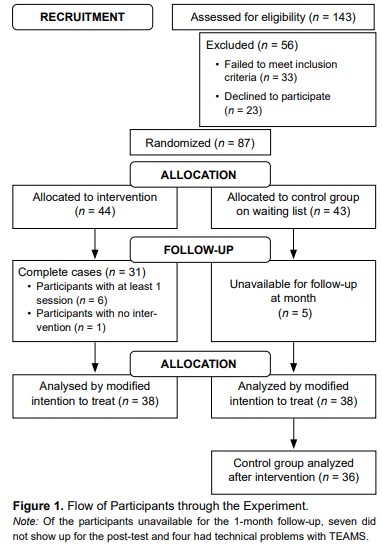
The population consisted of first-year students, considered a vulnerable group due to their transition to a new educational context (Norman et al., 2018). G*Power statistical software was used to calculate the required sample size for each group. This program allows for a priori analyses, such as estimating the sample size (n) required to achieve a desired statistical power given a specific effect size (Cárdenas & Arancibia, 2016). In this study, a two-tailed t-test was used to determine the difference between independent means, an effect size of .80, since in brief online interventions to reduce alcohol consumption in university students, magnitudes of the effect size from moderate d = .56 to large d = .85 are usually reported (Cronce & Larime, 2011; Samson & Tanner-Smith, 2015). A significance level of .05, and a statistical power of .80 indicated that each group should include at least 26 participants. The final sample consisted of 43 participants in the control group (CG) and 44 in the experimental group (EG). During the intervention follow-up, six participants dropped out of the EG and five withdrew from the CG, resulting in final analyzed samples of EG = 38 and CG = 38.
The overall dropout rate was 12% relative to the randomized sample, an acceptable proportion, as dropout rates exceeding 20% in RCTs may pose a threat to validity (Fewtrell et al., 2008). The follow-up rate was 88%, surpassing the 80% threshold commonly used in evidence-based guidelines to classify RCTs as high quality (Oxford Centre for Evidence-Based Medicine [CEBM], 2009).
The inclusion criteria were being a first- or second-semester student, being between 18 and 29 years old, and participating voluntarily. The exclusion criteria were having a severe mental disorder, and consuming other drugs. Figure 1 shows the flow chart according to CONSORT (Moher et al., 2012). Randomization was conducted using balanced blocks based on sex (male/female) to form the groups. Six blocks of combinations between the letters A and B were initially generated (corresponding to the type of intervention, experimental or control, respectively): 1) AABB, 2) BBAA, 3) ABAB, 4) BABA, 5) ABBA, and 6) BAAB. Groups of four participants were subsequently formed, with each group being randomly assigned a computer-generated number from one to six using Excel. This number represented one of the six sequences of combination blocks. For example, if a group was assigned the number three, its members followed the combination 3) ABAB, and each participant was assigned to one of the two study arms, following the recommendations of Marín-Navarrete et al. (2013). To conceal the random sequence, participants were notified via email of their group assignment on the TEAMS platform without revealing whether they were in the EG or CG. Masking was single-blind, meaning participants were unaware of the trial group to which they had been assigned. Follow-up evaluators remained blinded.
The intervention
The program consisted of two evaluation sessions (pre- and post-intervention) and two intervention sessions, each lasting 120 minutes, delivered via Microsoft TEAMS. Participants had access to audiovisual materials. TPB constructs, including behavioral beliefs, subjective norm, and self-efficacy, were operationalized, and the most appropriate cognitive-behavioral techniques were chosen to influence them (Michie et al., 2008; Murgraff et al., 2007; Rodríguez Kuri et al., 2011).
In the first session, the objectives were to impact social norms, modify attitudes by reducing the evaluations attributed to the expectations associated with alcohol consumption, and increase perceived behavioral control and self-efficacy to avoid alcohol consumption. The AUDIT-C results of participants were analyzed and compared to the actual consumption of university students to work on social norms. Audiovisual material and persuasive communication were used to address the expectations associated with alcohol use. The physical consequences of risky drinking were reviewed, and the advantages of low-risk drinking identified. Participants chose a low-risk consumption goal and developed an action plan to work on self-efficacy.
In the second session, the objectives were to increase perceived behavioral control and self-efficacy to avoid alcohol consumption, and engage in enjoyable activities as alternatives to risky drinking. Social skills practice was conducted through a behavioral test designed according to the guidelines of Caballo (2007) designed to help participants generate assertive communication strategies to resist the pressure to drink alcohol, thereby working on self-efficacy. Finally, participants were asked to create a list of enjoyable activities.
From August to December 2022, a pilot project was conducted to test the randomized trial procedure. Based on the results, protocol adaptations were considered, the range of participating students was expanded, and the quality of audiovisual materials was improved.
Measurements
Sociodemographic Data Questionnaire: developed ad hoc by the researchers to collect information for sample description. Data requested included sex, age, marital status, degree, semester, living arrangements, employment, diagnosed mental disorders, and drug use. Prior to randomization, affirmative responses to items regarding the presence of a mental disorder diagnosis and/or other drug use allowed us to identify participants who failed to meet the inclusion criteria.
Alcohol Use Disorders Identification Questionnaire (AUDIT;Saunders et al., 1993): A widely used instrument, validated in Mexico (Medina-Mora et al., 1998), showing good internal consistency (.92) among students (Moral et al., 2017). It identifies hazardous, harmful consumption and possible alcohol dependence through 10 items, each scored from 0 to 4. Scores of eight or more indicate harmful consumption. AUDIT-C, comprising the first three items of AUDIT, defines hazardous consumption as scores of five or more in men and four or more in women (García et al., 2016).
TPB for Alcohol Consumption Questionnaire (Diaz Negrete et al., 2015 based onRodríguez-Kuri et al., 2007): A scale designed in Mexico based on Rodríguez-Kuri et al. (2007), showing good reliability (.96) among Mexican students (Diaz Negrete et al., 2015). It includes 25 items evaluating behavioral beliefs (expectations regarding alcohol), two items on subjective norms, one on personal norms, one on descriptive norms, five on perceived behavioral control, and three on intention to consume alcohol.
Brief Situational Confidence Questionnaire for Young Mexican University Students (Salazar Garza et al., 2019): This scale measures self-efficacy regarding students’ perception of their ability to effectively cope with alcohol consumption situations. It consists of four items and has been validated among Mexican university students, with a reliability of .78.
LIBARE Retrospective Baseline (Sobell & Sobell, 1992): A calendar-based instrument where participants calculate the number of standard drinks consumed each day over a specified period ranging from seven days to one year (Almaraz & Alonso, 2018; Del Boca and Darkes, 2003). In this study, the period analyzed was three months before the intervention. Variables measured included the monthly average number of drinks, drinks per occasion, and days of consumption. LIBARE has shown test-retest reliability (≥ .87) in Canadians (Sobell et al., 1986) and .91 reliability in the version adapted for the Mexican population (Echeverría & Ayala, 1997). In Mexico, it has been used to evaluate online interventions for youth alcohol and drug use (Bravo-Alcocer et al., 2024; Stepanov & Cárdenas, 2022).
Procedure
The study protocol was approved by the university ethics committee (project approval number: 117) and registered at https://register.clinicaltrials.gov/ with the following code: NCT05533554. The academic department authorized the implementation of the study, with recruitment taking place in January and February 2023. A total of 143 students were invited to participate and received the pre-intervention evaluation. Two trained psychologists were responsible for the invitations, recruitment, and evaluations. Participants were informed by email of their assignment to the corresponding group on the Microsoft TEAMS platform and invited to attend the Computer Laboratory where the intervention was delivered. The CG received the intervention a week after the EG had completed the program.
Statistical analysis
A valid, reliable RCT requires careful sample planning, randomization of participants, and a well-defined statistical analysis strategy (Marín-Navarrete et al., 2013). The JAMOVI 2.6.44 program was used to obtain the reliability coefficients of the scales used in this study, and SPSS 25 was used for the rest of the statistical analyses. Descriptive analyses of pre- and post-intervention evaluations were conducted for the EG and CG. To test the normality of the distribution of the variables of interest, the Shapiro–Wilk goodness-of-fit test was administered, since the EG and GC comprised n < 50 participants. The results were statistically significant (p < .05), prompting the decision to use non-parametric tests for inferential analyses.
In the implementation of RCTs, losses may occur after randomization. However, the most widely recommended analytical approach remains the intention-to-treat (ITT) principle, whereby all randomized participants are included in the final analysis. Nevertheless, adherence to this approach is not always clearly reported (Gravel et al., 2007; Khan et al., 2021). Alternatively, the modified intention-to-treat (mITT) approach allows for certain justified exclusions (Sainani, 2010), such as participants who were not evaluated after the study began or were lost to follow-up. Montedori et al. (2011) found that the methodological quality of mITT studies was comparable to that of ITT trials. However, the authors emphasized the need for further research into the potential biases associated with mITT and recommended adherence to the updated Consolidated Standards of Reporting Trials (CONSORT) guidelines. These guidelines suggest replacing generic references to intention-to-treat analysis with a clear, concise explanation of which participants were included in the analysis (Schulz et al., 2010).
The modified intention-to-treat (mITT) analysis strategy was used to analyze and interpret the data. In this study, participants who did not return for the follow-up evaluation were excluded from the analysis (EG = 6, CG = 5). To compare differences between the EG and CG at the pre-intervention baseline, chi-square (χ²) was used for the sociodemographic variables, and the Mann-Whitney U test was used for the variables of interest.
The Mann-Whitney U test was used to determine intergroup differences in low- and high-risk subgroups and the Wilcoxon T test was employed to identify intragroup differences . Pre- and post-intervention differences in the CG after administering the intervention were also evaluated using the Wilcoxon T test. Since the probability of significance by chance increases when multiple comparisons are made, a conservative alternative is to use the Bonferroni correction (Dagnino, 2014). The alpha was therefore adjusted to p < .004 (.05/12 measurements: AUDIT-C, LIBARE—number of drinks, drinks per occasion, days of consumption, TPB Questionnaire, Brief Situational Confidence Questionnaire pre/post) in this study to consider a statistically significant difference.
Ethical considerations
The research adhered to international standards, including the Declaration of Helsinki (World Medical Association [WMA], 2017) and the Americas Document of Good Clinical Practices (Pan American Health Organization [PAHO], 2005), The protocol was approved by the Research and Ethics Committee of the Unidad Académica Multidisciplinaria UAT at Matamoros (project approval number117) and registered at https://register.clinicaltrials.gov/ with code NCT05533554. Participants were informed of the purpose of the study, asked to provide written informed consent, and assured that participation was voluntary, that they could withdraw from the study at any time without consequences, and that their confidentiality would be maintained.
RESULTS
The psychometric quality of the scales used in this sample in the pre-intervention assessment was measured using Cronbach’s alpha and McDonald’s ω coefficients. The results were: AUDIT (α = .79, ω = .81), AUDIT C (α = .85, ω = .87), TPB for Alcohol Consumption Questionnaire (α = .92, ω = .94), and Brief Situational Confidence Questionnaire (α = .89, ω = .89). The correlation between AUDIT and LIBARE (average monthly drinks, drinks per drinking occasion, and number of drinking days) using Spearman’s correlation was rho = .72 (p < .001), rho = .68 (p < .001), and rho = .71 (p < .001), respectively.
In the post-intervention evaluation, the reliability coefficients of the instruments were as follows: AUDIT (α = .87, ω = .90), AUDIT C (α = .83, ω = .84), TPB for Alcohol Consumption Questionnaire (α = .93, ω = .96), and Brief Situational Confidence Questionnaire (α = .96, ω = .96). The AUDIT-LIBARE correlation (monthly average number of drinks, drinks per drinking occasion and number of days of consumption), using the Spearman correlation were rho = .62 (p < .001), rho = .61 (p < .001) and rho = .60 (p < .001) respectively.
Participants had a mean age of 19.1 years (SD = 2.11) in the EG and of 19.05 (SD = 1.50) in the CG. Most participants in the EG and CG were female, 60.5% and 55.3%, respectively. The comparison of sociodemographic variables showed that the groups were homogenous in this respect (see Table 1).

Participants lost to follow-up were compared with those who completed the study within each group, with no significant differences being found in their baseline alcohol consumption as measured by AUDIT. The Mann-Whitney U test was used for these comparisons. In the experimental group, six participants were lost to follow-up (Mdn = 2.5, Range = 4) and 38 completed the study (Mdn = 1, Range = 14). The difference was not statistically significant, z = -1.39, U = 103.00, p = .72. In the control group, five participants were lost to follow-up (Mdn = 3, Range = 15) and 38 completed the study (Mdn = 1, Range = 17), with no significant difference either: z = -1.26, U = 64.50, p = .23. According to the Mann-Whitney U test, results for age and variables of interest, the groups were equivalent. The Bonferroni correction p < .004 (Dagnino, 2014) was applied to obtain a statistically significant difference (See Table 2).
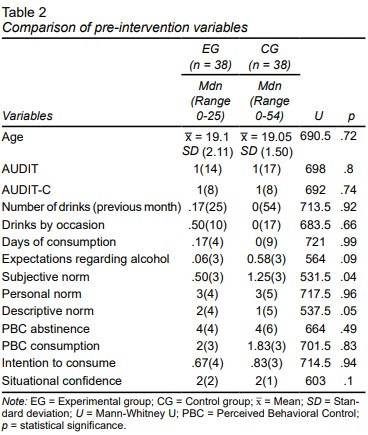
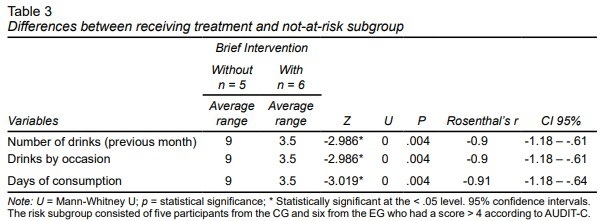
Intergroup comparisons using the Mann-Whitney U test revealed no statistically significant differences in EG participants compared to the CG. Subgroup analysis was then performed: low risk (score 0 to 3) and at risk (score > 4) according to AUDIT-C. In the post-evaluation, no differences were found between the EG and CG in the low-risk subgroup. In the risk subgroup post-evaluation, the number of standard drinks per month, drinks per occasion, and days of consumption in the EG showed a statistically significant decrease compared to the CG, with a high effect size (see Table 3).
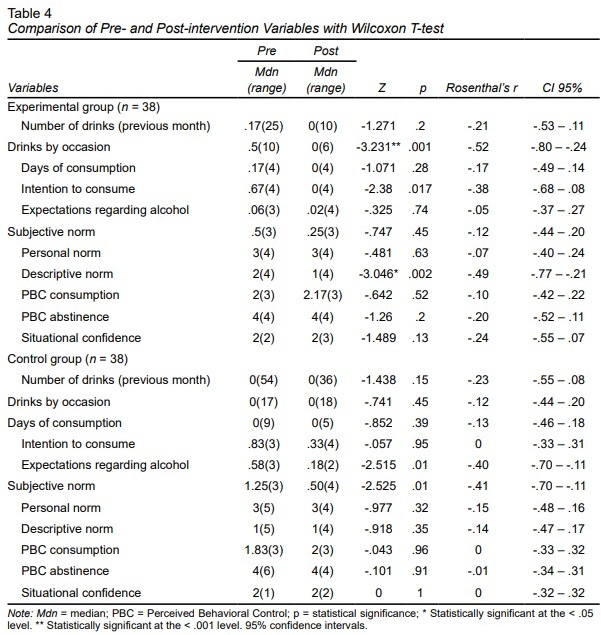
A pre-post intragroup comparison was performed to observe the effects of treatment in the EG compared to the CG . Statistically significant differences were found in the number of standard drinks per occasion. The post-measurement score (Mdn = 0; range = 6) was lower than the pre-measurement score (Mdn = .5; range = 10) in the EG, compared to the CG, with a moderate effect size (Rosenthal r = .52). A lower score was found in the descriptive norm of the EG in favor of the intervention (see Table 4).
DISCUSSION AND CONCLUSION
This study aimed to reduce the intention of and actual alcohol consumption among university students through an internet-based brief intervention. The contribution of this work lies in its design, which is supported by the TPB. Tebb et al. (2016) emphasize the need to use theories in designing online interventions, as they explain the pathways leading to behavior and guide its modification. In this case, the intervention achieved behavioral changes, with significant differences being observed in the number of drinks per occasion in the EG compared to the CG in the intragroup analysis. Subgroup analysis showed decreases in monthly consumption, number of drinks per occasion, and days of consumption in the risk group.
The results of this study are consistent with other web-based interventions where beverage intake decreased, the difference being that follow-up was at six months (Norman et al., 2018; Voogt et al., 2014). The practical implications of these results are that a brief two-session group intervention is available. As recommended by other authors like Salazar et al. (2024), short formats favor student retention in clinical trials on alcohol consumption, although sessions could be increased to analyze their effect on TPB variables such as attitude. Furthermore, the study results showed a decrease in drinks per occasion in the experimental group, which may protect young adults from adverse consequences (Almeida-Antunes et al., 2021; Gierski et al., 2020; Krieger et al., 2018; Steele et al., 2022), promote stress reduction, increase self-confidence, and improve quality of life (Charlet & Heinz, 2017).
Another significant aspect of the study is that it managed to reduce monthly consumption, the number of standard drinks per occasion, and the days of consumption in the subgroup of young adults with hazardous consumption. Hazardous consumption increases the likelihood of adverse consequences for the individual, including medical, psychiatric, familial, and/or social issues (Krieger et al., 2018). Accessing groups with hazardous alcohol consumption for participation and maintenance in interventions is typically challenging (Salazar et al., 2024). However, the relevance of this proposal lies in its integration of young adults with varying levels of consumption, allowing students with hazardous consumption to benefit from the content of the intervention without exposing themselves to the stigma associated with mental health (Lee & Shin, 2022; Tembo et al., 2017). Nevertheless, the small sample size means that the effect sizes achieved should be interpreted with caution.
The descriptive norm decreased in the post-evaluation of the EG compared to the CG. Descriptive norms refer to the belief that most peers consume alcohol and that this behavior is both normal and socially acceptable. These perceptions lead young people to overestimate the prevalence of drinking among their peers and predict substance use. Consumption is therefore influenced by erroneous descriptive norms, which can be addressed (Burkhart, 2009). A strategic component of the intervention plan was for participants to distinguish between their consumption and the perception of others’ consumption, using information about their peers’ actual consumption to adjust their perceptions. This adjustment could be reflected in a lower descriptive norm score. This change is significant because social norms methods have substantial effects on consumption and reduce long-term alcohol problems (Burkhart, 2009).
In the control group that received the intervention, young adults showed increased perceived behavioral control towards abstinence and situational confidence after the intervention, consistent with the findings of Salazar-Garza et al. (2012) and Alonso-Castillo et al. (2013). Self-efficacy protects against excessive alcohol consumption (Chomsri et al., 2018; Foster et al., 2014), meaning that people confident in their ability to abstain from drinking are likely to drink less than those who are insecure (Foster et al., 2014). Self-efficacy inversely predicts alcohol consumption (Adamson et al., 2009), supporting the use of strategies that increase self-efficacy in interventions aimed at moderating alcohol consumption (Cooke et al., 2016; DiBello et al., 2019). Moreover, another study found that favorable attitudes and self-efficacy towards moderating alcohol consumption were prospectively associated with a reduction in alcohol consumption and alcohol-related problems (DiBello et al., 2019).
Although efforts were made to adhere to the recommendations of the CONSORT guidelines (Schulz et al., 2010), this study has significant limitations that should be considered when critically interpreting findings. First, due to the nature of this type of design, the initial participant sample, prior to randomization, was obtained through non-probabilistic sampling. However, participants were recruited from one of the academic units of the Universidad Autónoma de Tamaulipas (UAT) with the highest student enrollment, making it a typical purposive sample for studies of this kind Bravo-Alcocer et al., 2024; Hernández et al., 2014; Voogt et al., 2014). Although the sampling procedure was not random, the assignment of participants to experimental and control groups was randomized. Additionally, sample size was calculated using a statistical procedure that considered the expected effect size to determine the appropriate number of participants per group. Although the results cannot be generalized to all university students, they can be compared with those from populations with similar demographic and contextual characteristics.
Another limitation concerns participant attrition during follow-up, a common issue in randomized trials (Akl et al., 2021; Fewtrell et al., 2008). In response to this, the data were analyzed using a modified intention-to-treat (mITT) approach, which excluded participants who did not complete follow-up assessments. Although this method may introduce bias, efforts were made to comply with CONSORT guidelines (Schulz et al., 2010) by providing a clear description of participant flow, reasons for attrition, and the number of cases excluded from the analysis.
Moreover, participants lost to follow-up were compared with those who completed the study within each group, and no significant differences were found in their baseline alcohol consumption characteristics. This provides some assurance that the participants retained in the analysis did not substantially differ from those who dropped out. As Akl et al. (2012) note, when individuals lost to follow-up present a less favorable baseline profile, they may have worse outcomes, potentially introducing bias. In this study, although some attrition occurred, the number of randomized participants exceeded the target sample size, and the final sample maintained sufficient statistical power for the planned analyses.
Self-reported data present both advantages and limitations. Contextual and environmental factors, such as cultural norms, the assessment setting, and immediate interpersonal dynamics, can influence participants’ responses and increase the risk of social desirability bias (del Boca & Darkes, 2003). This is particularly relevant in studies addressing sensitive topics such as substance use, violence, and abuse (del Valle & Zamora, 2021). To minimize this potential bias, all the instruments in this study were self-administered online by participants, thereby promoting confidentiality. Moreover, online evaluations conducted with proper planning and execution can provide data equal to or better than traditional paper evaluations (Chang & Vowles, 2013).
Anonymity and confidentiality have been shown to enhance the validity of self-reports on alcohol consumption by reducing the perceived risk of negative consequences (Langenbucher & Merrill, 2001). Participants were therefore encouraged to respond sincerely through the informed consent process and instrument instructions, which underlined the fact that their anonymity would be fully protected. Evidence suggests that anonymous self-reports increase the likelihood of honest responses, particularly in relation to stigmatized behaviors (del Valle & Zamora, 2021).
Assessing alcohol consumption over extended periods can lead to measurement errors due to memory deficits (Gmel & Daeppen, 2007). The LIBARE instrument was used, which has shown adequate test-retest reliability in the Mexican population (Echeverría & Ayala, 1997). Limited monitoring time points may not accurately capture the changing nature of consumption on specific calendar dates (Voogt et al., 2014), which is why future studies should monitor over longer periods ranging from six to 12 months.
While no single measure of alcohol consumption is ideal for all contexts or populations, this study employed validated instruments with solid psychometric properties. In particular, the LIBARE calendar has demonstrated validity in helping participants accurately recall drinking episodes and report consumption across specific time intervals (del Boca & Darkes, 2003). Despite their inherent limitations, self-report tools have shown acceptable levels of reliability and validity, and remain non-invasive, cost-effective methods for assessing alcohol use (del Boca & Darkes, 2003; del Valle & Zamora, 2021). All the limitations outlined above should be considered when interpreting the results of this study, and caution should be exercised when generalizing the findings to adolescents, students from private institutions, or out-of-school youth.
In conclusion, the intervention effectively reduced the number of drinks per occasion, monthly alcohol consumption, and frequency of drinking among participants in the at-risk group. This suggests that individuals with higher initial risk levels benefitted from the intervention content without being exposed to the stigma often associated with mental health treatment (Lee & Shin, 2022; Tembo et al., 2017), as they participated alongside individuals with varying levels of consumption. Moreover, a decrease in perceived descriptive norms was observed in the experimental group, indicating that targeting social norms may contribute to behavioral change. This adjustment in self-perception is noteworthy, as interventions addressing normative beliefs have shown long-term effectiveness in reducing alcohol-related problems (Burkhart, 2009). Nevertheless, the results observed in the experimental and at-risk subgroups should be interpreted with caution, considering the constraints related to participant attrition, potential measurement biases, and the limited generalizability to populations similar to the one studied.
The intervention applied to the control group was also associated with increased self-efficacy in managing situations involving potential alcohol misuse. This supports the integration of self-efficacy-enhancing strategies in the design of alcohol reduction programs, given the well-established association between higher self-efficacy and decreased alcohol use and related problems (DiBello et al., 2019). As a future research direction, confirmatory trials of this intervention are recommended, ideally incorporating an increased number of sessions and follow-up assessments at three, six, and 12 months, to better evaluate its long-term effects and risk–benefit profile.