INTRODUCTION
The World Drug Report of the United Nations Office on Drugs and Crime (UNODC, 2024) reports that 292 million people aged 15–64 have used psychoactive substances at least once in their lifetime, an increase of 20% over the previous decade. The most used psychoactive substances are marijuana and cocaine. However, poly-drug use is the most frequent, ranging from experimentation to dependence.
Global psychoactive substances consumption trends
Psychoactive substances use worldwide show significant variations depending on the country, continent or region (Schneider et al., 2018; Kilmer & Midgette, 2017). In many countries there are psychoactive substances such as marijuana, cocaine, amphetamine-type stimulants and opioids, which show high consumption. In this regard, it is relevant to consider each type of psychoactive substance (UNODC, 2024).
Marijuana ranks first: 228 million people used it at least once in their lifetime in 2022; 4% of the world's population. The number of people using it is estimated to have increased by 21% in the last decade.
Opioids ranked second with 60 million people in 2022: 1.2% of the world's population. Of these, 31.5 million also consumed heroin, which is the most lethal psychoactive substances, causing the highest number of overdose deaths.
Amphetamine-type stimulants are in third place: 30 million people used them in 2022; .6% of the world's population. North America is the region with the highest consumption: in 2022, 20 million people consumed substances of the 3,4-methylenedioxymethamphetamine (MDMA) family, such as ecstasy, equivalent to .4% of the world population.
Fourth place is occupied by cocaine with 23.5 million people using it in 2022. The Americas, Western and Central Europe are major consumers, and North America is the main region of consumption with 2.1% of users.
On the one hand, cocaine use is associated with alcohol use (Liu et al., 2018). Recently, its use with fentanyl is reported, with a prevalence of 14.8%, in a sample of 25 US states (Wagner et al., 2023).
On the other hand, the use of inhalants has been a little studied phenomenon in large cities worldwide. In Mexico, its use is traditionally associated with vulnerable, marginalized and hard-to-reach groups (Ortiz et al., 2015), young men are the main consumers (Paredes et al. 2022). In the United States, the National Survey on Drug Use and Health (NSDUH, 2023) reports that 2.2 million people: .8% of the population, have used inhalants in the last year. In turn, Australia reports its use as a major health problem in vulnerable situation groups; affecting the weight and stature of users and increasing the likelihood of new psychoactive substances use (Crossin et al., 2017).
In Mexico, the Sistema de Vigilancia Epidemiológica en Adicciones (SISVEA, 2022) reports that marijuana and cocaine remain matters of concern: consumption continues to rise, while demand for treatment is declining.
According to the National Health and Nutrition Survey (ENSANUT, 2023), an estimated 12.5 million people (16.5%) have used illicit substances at least once in their lifetime, primarily within the 20 to 65 age range. The most commonly used substances among men in urban areas were marijuana (14.9%) and cocaine (4.0%). Use of crack, amphetamines, inhalants, and ketamine remains below 1.3%. Among adolescents aged 12 to 19, lifetime prevalence of illicit substance use is 4.3%, primarily marijuana (4.1%). Additionally, 67.6% of the population reports being aware of fentanyl use.
The National Survey on Drug, Alcohol, and Tobacco Use (ENCODAT, 2017) shows that among the general population aged 12 to 65, lifetime prevalence of any drug use increased from 7.8% in 2011 to 10.3% in 2016. Marijuana use was particularly notable, rising from 6.0% to 8.6%. Among adolescents aged 12 to 17, overall drug use increased from 3.3% in 2011 to 6.4% in 2016, and marijuana use specifically from 2.4% to 5.3%. The average age of initiation for all drugs decreased from 20.6 years in 2002 to 17.8 years in 2016. These findings underscore the urgency of strengthening public policies on prevention and treatment of addiction, with a particular focus on youth populations.
Early Warning Systems (EWS)
Different countries, such as Australia, Spain, Germany, the United States, Colombia and Argentina, operate early warning systems to identify consumption trends, changes in use patterns, new psychoactive substances and population groups at risk, among other indicators. Early warning systems are necessary to design prevention programs, awareness-education promotion, as well as to make public health, education, infrastructure and economic decisions (United Nations Secretariat of the International Strategy for Disaster Reduction [UNISDR], 2006; Organization of American States [OAS], 2019; Alejo & García 2021; Sutherland et al., 2022; Bencomo & Pinzón, 2023; Miranda, 2023).
As can be observed, psychoactive substance use remains high, contributing to the deterioration of both physical and mental health among the Mexican population. Therefore, in Mexico City, it is necessary to obtain regularly updated information that can support the design of public policies—particularly those focused on prevention, education, and risk reduction related to substance use, and aligned with changing consumption patterns.
Information Reporting System on Drugs
Mexico City (CDMX) has a local Early Warning System (EWS) for psychoactive substance use, known as the Information Reporting System on Drugs (IRSD). It was developed and is coordinated by the Instituto Nacional de Psiquiatría Ramón de la Fuente Muñiz (INPRFM). Since 1987, the IRSD has collaborated with government institutions and civil society organizations (CSOs), including Centros de Integración Juvenil, Hospital Fray Bernardino Álvarez, Hospital de Especialidades Toxicológicas Venustiano Carranza, Ministerios Públicos de la Fiscalía General de Justicia de la Ciudad de México, Casa Carrasco, and other key institutions.
The objectives of the IRSD are: 1. to provide a permanent and updated overview of consumption; 2. to monitor trends in use, its evolution over time, new psychoactive substances, consumption patterns and new forms of administration; 3. to identify user profiles in a target population of CDMX.
Therefore, the objective of this study is to present a first image about the most important consumption trends in CDMX during the period 1987–2021, using the epidemiological category "ever use", among psychoactive substances users according to IRSD.
METHOD
Study design
This is a repeated cross-sectional time series study designed to estimate consumption trends.
The data obtained constitute a “micro-model” of a broader, inherently “macro” problem, according to the consensus of participating experts. Therefore, if the results indicate changes in the variables included in the model, it can be inferred that the underlying issue within the surveyed population is evolving in the same direction.
Sample description
57,565 users evaluated during the period 1987–2021, through intentional sampling, in governmental institutions of the health (n = 40,809) and justice sectors (n = 14,336), as well as Civil Society Organizations (CSO) (n = 2,420). This indicates that participation is primarily oriented toward health institutions.
Measurements
The IRSD collects epidemiological information by means of the "Individual Report on Drug Use" questionnaire. It is applied to cases identified during the admission process to participating institutions in June and November. It has 28 items and evaluates the consumption of 12 psychoactive substances. Data are collected on use, route of administration, age of onset, reason for admission, and associated problems. The application time ranges from 30 to 45 minutes.
To ensure standardization of data collection across institutions, personnel responsible for administering the instrument receive training. The application process is supervised by researchers from the Institute. Furthermore, the same instrument and case criteria are consistently applied.
The instrument is completed by staff from the participating institutions who work directly with substance users. In certain cases, when necessary, researchers from the Institute assist with the questionnaires. Since 1987, the instrument has remained unchanged. However, new indicators are currently being explored.
The instrument’s validity—its ability to measure accurately and precisely—has been established through expert judgment. Experts have agreed on the relevance, clarity, and appropriateness of the items, as well as other factors enhancing its validity. Reliability, or consistency over time, has been demonstrated through 34 years of continuous application. The results allow for comparisons across different evaluation periods and help identify changes in patterns of substance use.
Procedure
Sampling criteria include all individuals admitted to the participating institutions during the evaluation periods who have consumed at least one psychoactive substance without a prescription at any point in their lives. These individuals are considered cases. Substances intended for medical use are included. Individuals who have only used alcohol or tobacco are excluded. This approach is referred to as purposive (intentional) sampling.
Statistical analysis
Data were analyzed using IBM SPSS Statistics 29.0 software. Time series at regular intervals were used, the aggregate of which reveals the trends of the phenomenon over time.
Nature of the results: The results are expressed in terms of trends: a series of three or more successive measurements that point in the same direction and thus reflect the values of the variables of the phenomenon. The set of these variables constitutes a micro-level model of the phenomenon of psychoactive substances dependence, which by its nature is macro. The results indicate the internal proportions of the phenomenon regardless of its magnitude, a subject that corresponds to other methodologies based on population censuses where the interest is to know the size of the phenomenon. In the case of the IRSD, it is of interest to know the proportions of users of each of the substances, as well as their variations over time.
Ethical considerations
The information collected by IRSD is anonymous and confidential. This follows the ethical guidelines of the Council for International Organizations of Medical Sciences (CIOMS, 2016) in collaboration with the World Health Organization and the Helsinki declaration of the World Medical Association (WMA, 2017).
RESULTS
Sociodemographic characteristics of the users as well as the main consumption trends in the epidemiological category "ever use" are presented.
User profile
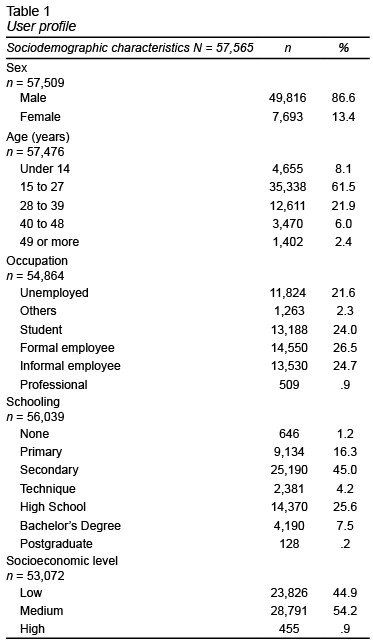
Table 1 shows the main demographic variables, such as sex, age, occupation and socioeconomic level of the 57,565 records obtained during the last 34 years. The majority of the users are men: 86.6% (n = 49 816) with a smaller proportion of women 13.4% (n = 7 693). 61.5% (n = 35,338) are between 15 and 27 years of age; this age range accounts for the highest consumption of marijuana, cocaine and inhalants. Most are formally employed 26.5% (n = 14,550), with a significant number of students 24% (n = 13,188) and unemployed 21.6% (n = 11,824). Almost all are of middle and low socioeconomic level 99.1% (n = 52,617).
Trends in “ever use” consumption1
The most commonly used psychoactive substances in Mexico City are marijuana, cocaine and inhalants. Their trends have varied during the study period due to changes in supply and demand, availability, changes in the legal status of the substances, sociocultural context, etc.
Data for each psychoactive substance are presented below.
Data for each psychoactive substance are presented below
Figure 1 shows different moments in the use of marijuana, cocaine and inhalants.
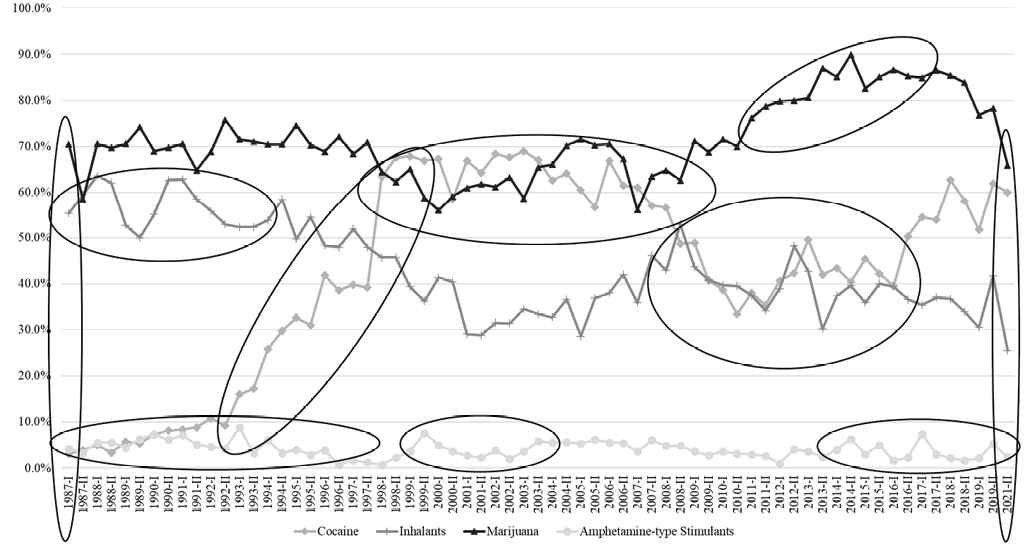
In 1987, the marijuana level was 70.5% and remained at this level until 1997. Between 1998–2000 it reaches 56%. From 2001 to 2006 it reaches a level of 70.6% and drops in 2007 to 56.1%. The year 2014 reaches the highest point with 89.9% as indicated. In 2021, marijuana use accounted for 65.9%, indicating that its prevalence has remained high and stable throughout the evaluation period.
Cocaine in the years 1987–1991 shows low levels: between 3% and 8%. However, from 1992 to 1999 it increases considerably: from 10.8% to 67.9%. This shows the profile of an epidemic, and consumption surpasses marijuana between 1998–2003. This continues until 2006 with levels of 60%. By 2008 it decreases to 48.7%, which is similar to inhalants. This level is maintained until 2016 with around 40%. Since 2017, an increase to 60% has been reported, which represents a significant rise compared with the first evaluation conducted in 1987.
The consumption of inhalants in 1987 was 55.3%, later rising to 60%; it decreased from the 1990s onwards and reached its lowest level in 2005 with around 30%. In 2006, consumption exceeded 40%. From that point onward, the trend continued with slight variations until 2021, when it declined to 25.5%. As can be observed, inhalant use has shown an irregular pattern from the first evaluation through 2021.
The use of amphetamine-type stimulants shows a trend of less than 10% throughout the evaluation period. Consumption was highest in the first half of 1993 with 8.8%. In subsequent evaluations, consumption remained around 3.9%. In 2021, it was 2.4%, representing a decrease of 1.8% compared to the first evaluation conducted in 1987.
Trends in “ever use” consumption by sex
Figure 2 shows that the proportion of marijuana use is higher in men from 1987 to 2012, with a trend of around 70%. However, it is striking that the proportion of women is equal to that of men in the years 1990, 2005 and 2013. For the period 2014–2017 women outnumber men in some assessments. Recently, consumption levels are similar in both sexes.
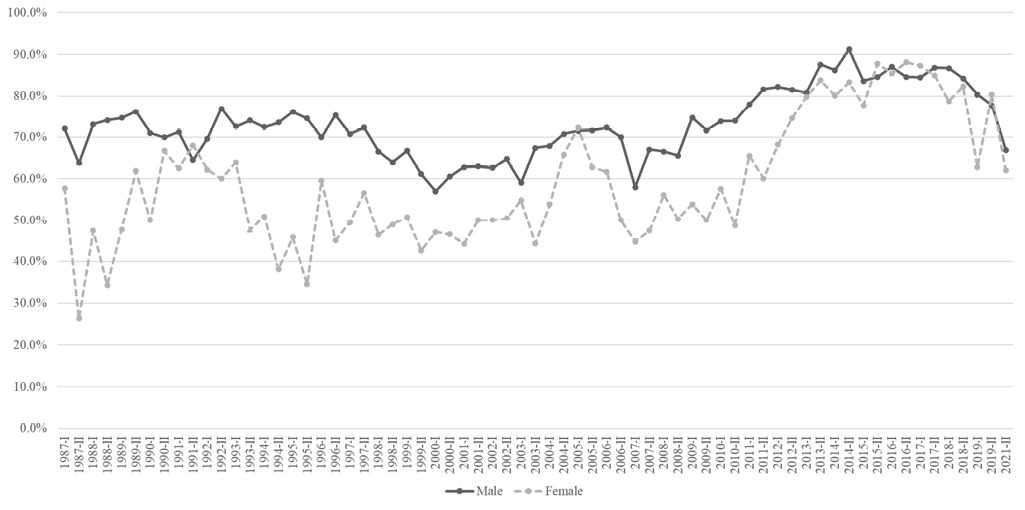
Figure 3 shows that the proportion of cocaine use among men and women shows slight variations during the period 1987–1998, despite the increase in the trend from 3.8% to 69.7%. From 1998 to 2000, use increases between men and women: 50% and 70% respectively. From 2006 to 2011 the consumption levels of men are higher than those of women, however, the consumption gap between both sexes is more marked between 2013 and 2016. The highest point of consumption for both sexes occurs in 2000 and 2002 with around 70% in both cases.
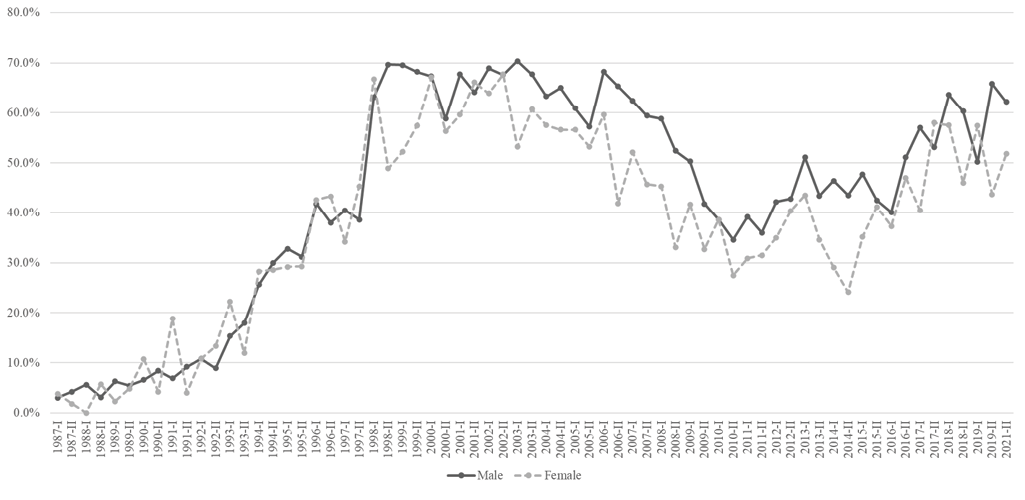
Figure 4 shows that inhalants use among men is higher in 1991 and 1994. Between 2002 and 2012, women's consumption increases substantially in relation to men: around 40% for men and 70% for women; to decrease in this group to 18% in 2019. In 2021 it decreases for men and women: about 10% and 20%, in each case.
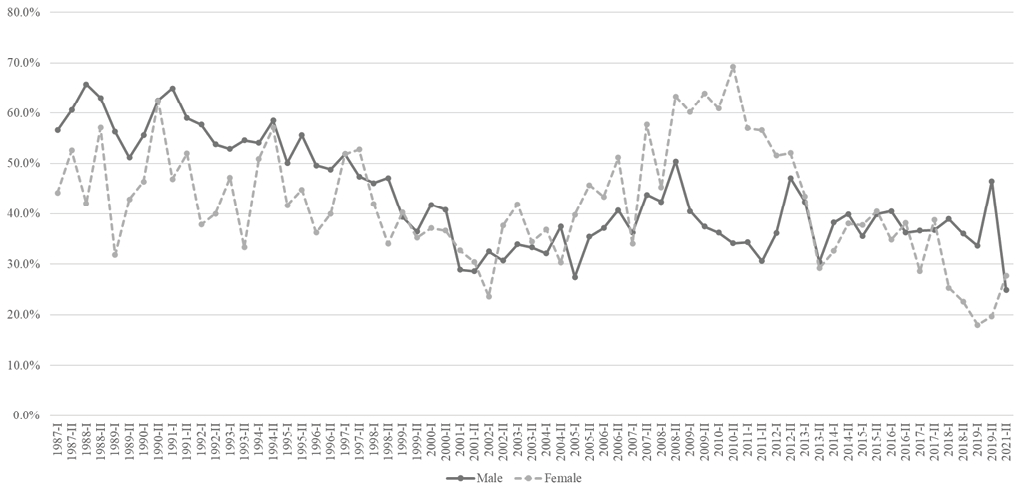
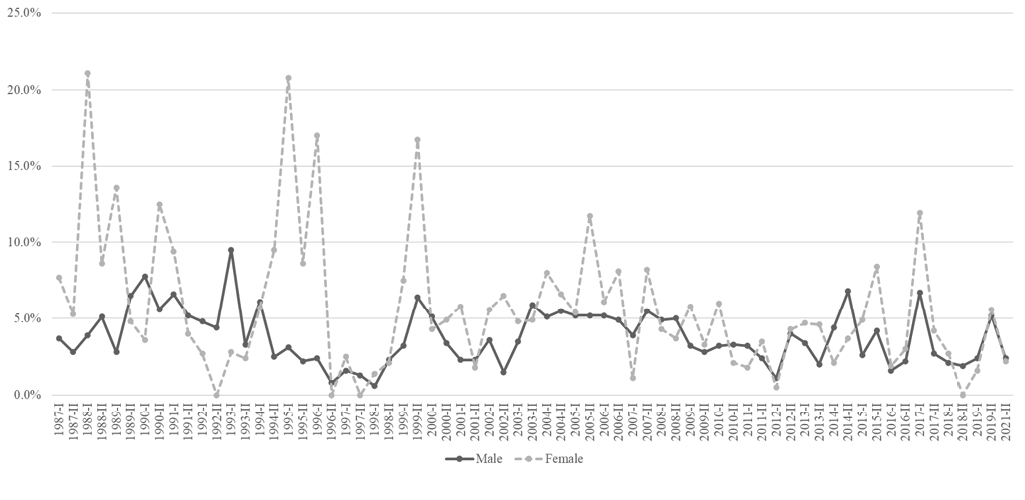
Figure 5 shows that the proportion of amphetamine-type stimulant use is higher among women: over 20% during the evaluation period. Starting in 2003, the gap between both sexes decreases. In 2021, men and women show decreases with trends of 2.4% and 2%, respectively.
DISCUSSION AND CONCLUSION
Psychoactive substances use trends in Mexico City coincide with the global picture in the high levels of marijuana and cocaine use (UNODC, 2024). The high and stable consumption of marijuana over more than three decades shown by the IRSD is also consistent with reports from the Sistema de Vigilancia Epidemiológica en Adicciones (SISVEA, 2022) indicating that it is the number one psychoactive substances of initiation in the country from 1994 to 2023.This is consistent with epidemiological data from the Centros de Integración Juvenil, which identify marijuana as the most commonly used illicit drug—ever used in a lifetime—among individuals who sought treatment at that institution between 2004 and 2024 (CIJ, 2025). This high consumption is related to its high availability, low cost and the erroneous perception that it is not very dangerous because, according to users, "it is of natural origin".
The sociodemographic characteristics of the 57,565 users recorded by the IRSD indicate that young males—between 15 and 39 years of age—are the primary users of psychoactive substances. This finding is consistent with the reported increase in marijuana use among individuals under 18 years of age, as noted by the CIJ (Díaz-Negrete, 2017). These data also reveal that this group is at a disadvantage, largely due to psychosocial factors inherent to this stage of development. Consequently, this population becomes a priority for intervention through prevention efforts, demand reduction programs, and treatment services for substance use.
Additionally, the acquisition of this substance has expanded through the Internet and social media platforms (CONASAMA, 2024). According to Perales (2021), social media portrays substance use as a positive behavior, creating ambivalence and confusion between the messages promoted by prevention campaigns and the information presented in the media.
Cocaine consumption escalated to significant levels during the 1990s and became a popular substance, highly available and inexpensive, used in less favored social strata (Unikel et al., 1998). For Del Bosque et al. (2014), in the first decade of the 2000s, the increase in consumption was due to the closure of the Caribbean route to move the psychoactive substance from the Andean region to the United States and Europe and is then taken through the Central America-Mexico corridor. This spread its use in our country: between 1988 and 2008, consumption increased more than sevenfold: from .3% to 2.6% in the population aged 12 to 65(Ministry of Health, 2008).
For the IRSD, cocaine use between 1987 and 2003 presents three moments: the first, from 1987 to 1992, with a low level, lower than marijuana and solvent inhalants; the second from 1992 to 1998, with the highest consumption peak; and the third, from 1998 to 2003, in which it remained stable in first place, increasing in 2003 (Ortiz, 2005). The period from 1998 to 2015 had the highest number of users of this psychoactive substance (Romero et al., 2019) and subsequently consumption levels like solvent inhalants.
The use of inhalants attracts attention because they are products for industrial use, contain volatile substances, cause psychoactive effects, and are the third most commonly used psychoactive substance by young people. However, on the world scene there are places, such as the United States, where they constitute a serious phenomenon but are currently little studied. In this regard, in the United States it is reported that 2.2 million people used inhalants in the last year prior to the study according to the National Survey on Drugs and Health 2022 (NSDUH; 2023); while Australia, as noted, reports the use of inhalants as a major health problem in vulnerable situation groups (Crossin et al., 2017).
In Mexico, their use has historically been among vulnerable, marginalized, hidden and hard-to-reach groups (Ortiz et al., 2015). It is in the 1960s that they were studied as substances of abuse, they were called “psychoactive substances of poverty". Over time, their use permeates the middle classes and is currently reported in various population groups: adolescents, students and groups that subsist on the street. This is due to its low price, diversity of presentations, multitude of places of sale, ease of carrying and handling, as well as the apparent safety of the effects (Ortiz et al., 2015; Medina-Mora et al., 2015; Kurtzman et al., 2001). Of great concern is this consumption, as there is now evidence that repeated exposure to toluene, for example, produces significant cognitive and psychomotor deficits (Cruz et al., 2019).
The trend in the use of amphetamine-type stimulants, specifically "crystal meth" and "ecstasy" (MDMA), is in fourth place. Crystal shows low levels, but its use tends to increase. This coincides with SISVEA reports, which report the increase of crystal meth as a psychoactive substance of initiation from 2.4% in 2016 to 9.3% in 2022. Similarly, its variation as an impact psychoactive substance goes from 22.9% in 2016 to 58.8% in 2022, thus surpassing cocaine and becoming the most reported impact psychoactive substance. Currently, users of treatment centers in 24 entities in the country report crystal meth as the most frequent impact psychoactive substance (SISVEA, 2020, 2022). The National Commission on Mental Health and Addictions (CONASAMA) in the International Narcotics Control Board (INCB, 2023) confirms the increase of crystal meth consumption in the country: of 218% between 2017 and 2022.
Amphetamine stimulant use trends by sex show higher consumption among males, although they also reveal that females are approaching male levels (Del Bosque, 2014; Villatoro et al., 2017; Romero et al., 2019, SISVEA, 2022). Therefore, the increase in psychoactive substance use and its significant impact on the health of both men and women require a comprehensive public policy approach. This should include measures for prevention, treatment, and social reintegration. Furthermore, emphasis must be placed on strengthening related areas such as mental health education, among others (CONASAMA, 2024).
Among the limitations of this study are the nature of the repeated cross-sectional design and the use of intentional sampling, which require a distinct statistical approach to identify future trends in substance use. Another limitation is the current inability to conduct analyses by geographic zone—such as users’ place of residence, locations of substance use, or geographic availability of treatment services. This limitation arises from the use of intentional sampling, which restricts the generalizability of the data.
With regard to COVID-19, this variable is considered extraneous, as it prevented users from attending treatment centers. As a result, institutions experienced reduced demand for services, and the data collection process was limited by institutional policies aimed at preventing contamination.
Finally, IRSD data from the last three decades show that psychoactive substance use in Mexico City is dynamic and multifactorial. This underscores the need for permanent monitoring, and therefore an early warning system such as IRSD is important to identify risk groups, psychoactive substance of use, the trajectory of the phenomenon, health risks, promote the dissemination of findings on new substances, patterns of use, etc. The SISVEA (2022) agrees, noting that in recent years marijuana is the main psychoactive substance of initiation at national level. However, increasingly younger users are starting with amphetamine-type stimulants, such as crystal meth, which has displaced inhalants since 2017.
The IRSD is an early warning system that has been in place for more than three decades in Mexico City. Its operation has helped to identify trends in psychoactive substance use, has supported decision-making, the design of public policies and other measures that have contributed to improving the care provided to users. The phenomenon of psychoactive substance use is dynamic and requires permanent monitoring; this makes the operation of this system necessary to identify changes in trends, particularly new substances, such as recently the use of fentanyl, an opioid identified by the IRSD in Mexico City since 2018 (Ortiz et al., 2018; Romero et al., 2019). This psychoactive substance is used especially among young people, and this imposes significant challenges to the health system. In this regard, CONASAMA (2024) reports that since 2018, cases of fentanyl users have been received in treatment centers, growing from 10 cases in 2018 to 430 cases in 2023, mainly in the north of the country. This psychoactive substance is of concern due to its high addictive potential and high risk of life-threatening overdose (Cruz et al., 2023), as users consume the clandestinely manufactured one, mixed with other psychoactive substances such as cocaine, MDMA and heroin (National Institute on Drug Abuse [NIDA], 2021). As a result, users are unaware that it contains numerous unknown substances, and this increases the risk of overdose and even death.
In the future, the IRSD should obtain information on new psychoactive substances among vulnerable situation groups: migrants coming from both provincial and rural areas of the country, those coming from Central and South America, as well as Africa and settling in Mexico City; in addition to street populations, indigenous people and the LGBTQ+ community, etc. It is also necessary to monitor the entry/exit of psychoactive substances in the market and the new distribution-consumption scenarios, based on strengthening inter-institutional links to expand epidemiological surveillance. In this regard, Albores-García et al. (2023) point out that to prevent or reduce the number of deaths related to new opioids, such as fentanyl, it is necessary to maintain surveillance programs to monitor trends in psychoactive substances use, as well as to be vigilant in the rapid identification of new psychoactive substances.