INTRODUCTION
Attention-deficit/hyperactivity disorder (ADHD) affects individuals’ academic, social, and family functioning (American Psychiatric Association, 2022; Scheffler et al., 2007). Mothers, the usual primary caregivers of children diagnosed with ADHD, frequently experience symptoms of depression, anxiety, and parenting stress (Babinski et al., 2020; Hernández, 2018; Weissenberger et al., 2017).They also face caregiving demands, including psychiatric care costs, pharmacological side effects, school difficulties, and family conflicts (Barrera-Tovar, 2013; Toomey et al., 2012). Childhood mental health problems can place significant physical, emotional, and socio-economic burdens on caregivers (Johnston & Mash, 2001).
In a recent Mexican public health study (n = 268), 90.8% of mothers evaluated experienced some degree of Parental Burnout (PB) (Díaz-Sánchez et al., 2024), defined as affective exhaustion associated with chronic stress stemming from the parental role (Mikolajczak & Roskam, 2018; Pérez-Díaz & Oyarce Cádiz, 2020). According to Self-Determination Theory, this exhaustion arises when chronic caregiver burden prevents the satisfaction of basic psychological needs, particularly autonomy and competence, reducing coping resources and creating feelings of inefficacy, coercion, and guilt (Desimpelaere et al., 2025). Díaz-Sánchez et al. (2024) note that PB is largely determined by an unequal distribution of caregiving responsibilities and traditional gender roles.
Clinically, PB is managed by addressing the imbalance between parental demands and available psychological, social, and material resources (Mikolajczak & Roskam, 2018). Recent evidence in Latin American populations indicates that cultivating psychological resources such as self-compassion acts as a key protective factor for mitigating PB (Buitron-Huillca & Manrique-Millones, 2025).
Interventions including psychoeducation, emotional regulation training, and effective parenting practices have proved useful for reducing PB (Brianda et al., 2020).Although comprehensive ADHD treatment includes psychosocial support for caregivers, these interventions remain limited in Mexico (Barragán-Pérez et al., 2007). Furthermore, many parent-directed interventions prioritize child behavioral strategies over caregivers’ needs regarding stress management, self-care, and PB prevention (Martin & Candow, 2019; Scandar & Bunge, 2017).
To address these needs, recent evidence suggests integrating somatic approaches. Somatic techniques operate through bottom-up processing, modifying the physiological state to regulate emotional responses. Body awareness and interoception therefore reduce nervous system hyperarousal in response to chronic stress (Kuhfuß et al., 2021; Payne et al., 2015).Within this framework, Trauma-Informed Yoga (TIY) combines Hatha Yoga movements and breathing exercises with specialized training for facilitators to recognize expressions of trauma and chronic stress and promote interoception and self-regulation (Cushing et al., 2018;Horton, 2017; Justice et al., 2018; Rousseau & Cook-Cottone, 2018). Previous studies have shown that TIY-based interventions can reduce depression, anxiety, and stress symptoms, while improving self-efficacy and emotion regulation (Beranbaum & D’Andrea, 2023; Mitchell et al., 2014; Nicotera & Connolly, 2020; Price et al., 2017; Rhodes, 2015; Riegler et al., 2022).
Women perform a disproportionate share of caregiving (Quinteros et al., 2017). In Mexico, this gendered distribution is evident. The social repercussions of the COVID-19 pandemic exacerbated women caregivers’ daily challenges, significantly impacting their mental health (Sulmont et al., 2021). Moreover, caregivers of children diagnosed with ADHD report substantially higher stress, caregiving burden, and psychopathology compared to those parenting children without the disorder (Johnston & Mash, 2001). These circumstances increase their risk of developing PB, a syndrome characterized by a structural imbalance between personal resources and environmental stressors (Manrique-Millones et al., 2022; Pérez-Díaz & Oyarce Cádiz, 2020). TIY interventions therefore seek to provide essential resources to manage the psychophysiological reactions associated with chronic stress.
Yoga-based practices yield positive psychological and physiological outcomes across both clinical and general populations (Peterson et al., 2017). Studies analyzing yoga-based interventions consistently report health benefits, regardless of the delivery format. Although online modalities have proven feasible, effective, and cost-effective (Donnelly et al., 2019; Lopez et al., 2018; Martin & Candow, 2019; Varambally et al., 2013), research on online TIY in Latin America remains scarce. Evaluating feasibility in the Mexican context is relevant because public mental health support for caregivers, unlike other groups, is scarce, and urban commuting presents significant geographical and economic barriers. This accessible, home-based intervention reduced the time and financial constraints associated with traditional care.
The present study evaluated the feasibility, acceptability, and preliminary effects of an online TIY intervention for depression, anxiety, stress, and PB symptoms in women caregivers, all mothers of children with ADHD. The working hypothesis posited high feasibility and acceptability for the online TIY intervention, expecting ≥ 70% retention and positive evaluations. Moreover, given the within-subject design, participants were expected to demonstrate moderate-to-large effect sizes, with reductions achieving reliable clinical change in depression, anxiety, stress, and parental burnout symptoms.
METHOD
Study design
The study comprised two phases. Phase one involved the design and validation of the intervention. Three TIY experts evaluated the thematic content, physical poses, and the invitational language of the facilitator by reviewing an intervention outline and a video of the first session. Observations were incorporated into the final protocol, in accordance with TIY literature (Cook-Cottone et al., 2017; Rousseau et al., 2019; Tibbitts et al., 2021). Phase two evaluated intervention feasibility using the methodological framework of Bowen et al. (2009), recommended for interventions with limited prior evidence or requiring cultural adaptation. This approach makes it possible to examine acceptability and preliminary efficacy before conducting studies with more robust experimental designs. The evaluation used a within-subject AB design with repeated measures (Kazdin, 2017; Lobo et al., 2017). Six measurements were collected per participant: two at baseline (Phase A), two during the intervention (Phase B), and two follow-ups at one and two months post-intervention.
This design enabled the analysis of individual changes over time, reducing the methodological risks associated with between-subject designs, where individual clinical responses are often masked by group averages. Five independent individual replications were conducted, providing adequate external validity to support the findings in this preliminary phase (Lobo et al., 2017). At the end of the intervention, program acceptability was evaluated using an ad hoc questionnaire.
Participants
The sample consisted of five women caregivers, all of whom reported being the mothers of children diagnosed with ADHD treated at the outpatient clinic of a public pediatric psychiatric hospital in Mexico City. Inclusion criteria comprised being aged 18 to59, having home internet access, agreeing to keep the camera on during sessions, having had no prior experience with meditation or yoga, spending at least 30 hours a week on the care of a 6- to 12-year-old child diagnosed with ADHD, and meeting physical activity safety criteria (Rodríguez, 1994). Women caregivers of children with a comorbid diagnosis of autism or intellectual disability were excluded. Individuals who did not meet these criteria were provided with information on free psychological support services.
Measurements
Inclusion form: An ad hoc questionnaire to determine eligibility.
Physical Activity Readiness Questionnaire (PAR-Q): Used as an initial screening tool to identify potential medical contraindications or cardiovascular risks before beginning the intervention. The instrument consists of seven dichotomous items (yes/no) designed to detect individuals who require medical evaluation prior to increasing their physical activity. We used the Spanish adaptation (Cuestionario de Aptitud para la Actividad Física) validated by Rodríguez (1994).
Mental health care history questionnaire: An ad hoc questionnaire to collect information on psychological or psychiatric care history, previous diagnoses, and pharmacological treatment.
Socioeconomic Status Index: An instrument to estimate participants’ socioeconomic status based on the criteria established by the Mexican Association of Market and Opinion Intelligence Agencies (AMAI, 2022).
Depression Anxiety Stress Scales (DASS-21): The short version of the DASS assesses symptoms of depression, anxiety, and stress using 21 items distributed across three subscales, with responses on a four-point Likert scale (Henry & Crawford, 2005). The Spanish version of the scale has demonstrated adequate levels of validity and reliability (Gurrola et al., 2006).
Parental Burnout Assessment (PBA): Assesses parental burnout through dimensions related to emotional exhaustion, contrast with previous parental self, feelings of being fed up with one’s parental role, and emotional distancing from one’s children (Roskam et al., 2018).
Acceptability: Participants’ experience during the online program was assessed after the eight sessions using a Spanish back-translated questionnaire adapted from Huberty et al. (2020). Depending on the specific construct of each item, responses were recorded on 4-point Likert scales (1 = Not at all to 4 = A lot; or 1 = Not at all satisfied to 4 = Completely satisfied). The overall scoring interpretation was linear, with higher total scores indicating greater program acceptability and satisfaction.
Usability: Participants’ technological experience (Colorado-Aguilar & Edel-Navarro, 2012) with online evaluations and videoconferencing was assessed after the eight sessions using a 6-item ad hoc questionnaire. Three items used a 10-point scale: two evaluated ease of use (1 = Very difficult to 10 = Very easy), with higher scores indicating greater usability, and one assessed perceived time burden (1 = Very little to 10 = A lot). The remaining items included two categorical questions regarding connectivity stability and future format preferences, together with one open-ended question for general comments.
Procedure
The study was conducted between March and July 2023. Participants were recruited through volunteer sampling via posters and flyers in the outpatient clinic at a public pediatric psychiatric hospital in Mexico City. Interested individuals contacted the first author via telephone or WhatsApp, receiving an ad hoc inclusion form and the Physical Activity Readiness Questionnaire (PAR-Q) (Rodríguez, 1994) to verify eligibility. Once this information had been confirmed, the first author scheduled an informative video call, after which the participant signed an electronic informed consent form. The child’s diagnosis was subsequently confirmed in the medical records.
Since the study focused on the impact of the intervention on the primary caregiver’s mental health indicators, the timeline reflects the milestones in the AB within-subject design. Once informed consent had been obtained, participants were sent links to the assessment instruments and individual session schedules. They completed a total of six assessments:
Baseline (A): Two measurements separated by a two-week interval (Assessment 1 at consent, and Assessment 2 just before the first session) to confirm symptom stability.
Intervention (B): Eight individual 50-minute sessions conducted via videoconference using Google Meet. Two assessments were conducted: an intermediate evaluation at the end of the fourth session (Assessment 3), and a final one after the eighth session (Assessment 4). The acceptability and usability questionnaire was only administered during this fourth overall assessment.
Follow-up: Two additional measurements at one and two months post-intervention (Assessments 5 and 6), marking the formal end of participation.
Data were collected using Google Forms, and access was restricted to the first author (who served as the facilitator) to ensure participant confidentiality. After the eighth session, participants were informed that the WhatsApp communication channel with the facilitator would remain open for any questions or comments about their experience with the resources practiced. They were also notified of the scheduled follow-up assessment. After the final follow-up, participants were reminded that this communication channel would still be available for ongoing support or feedback.
The intervention design was validated by a panel of experts to assess its theoretical relevance, methodological coherence, and alignment with TIY principles. Three native Spanish-speaking, certified TIY specialists, with three to four years of in-person and one to two years of online experience facilitating interventions for women and clinical populations, evaluated the intervention protocol by reviewing an outline and a video recording of the first session. They analyzed the structure of the program, the invitational language of the facilitator, and the sequencing of the physical positions.
The experts evaluated the session objectives, thematic content, physical forms, and invitational language using a five-point Likert scale (with higher scores indicating greater TIY alignment). They also provided qualitative feedback on the program structure and the consistency of the invitational language with TIY principles (Cook-Cottone et al., 2017; Horton, 2017; Justice et al., 2018). The first author, trained in TIY, and the research team reviewed the recommendations. Suggested modifications were incorporated into the final protocol.
The final TIY-based intervention was divided into eight weekly, individual, 50-minute videoconference sessions. In accordance with TIY principles, the program incorporated mindful breathing, gentle sequences of Hatha Yoga-derived physical positions, interoceptive awareness exercises, and guided relaxation. These practices were designed to recognize stress-related bodily sensations and develop self-regulation resources.
To enhance the psychological safety of participants, sessions consistently employed invitational language, encouraged personal choice, and maintained a predictable sequence of poses.
Statistical analysis
Data analysis followed a within-subject repeated measures approach, examining the changes observed in each participant over time (Kazdin, 2017). In within-subject experimental designs, methodological rigor prioritizes individual clinical relevance over statistical significance (p-value). The analysis strategy therefore evaluated effect size and clinical significance.
To estimate baseline to intervention changes, we used the Nonoverlap of All Pairs (NAP) index, a non-parametric measure recommended as a standard for single-case design analysis. NAP quantifies non-overlapping pairs between phases to estimate effect size (Parker & Vannest, 2009). NAP values indicate small (.53 – .65), moderate (.66 – .80), or large (> .80) effects.
To determine clinical significance, we calculated the Reliable Change Index (RCI) to determine whether baseline-to-post-intervention changes exceeded measurement error (Jacobson & Truax, 1991). Absolute RCI values greater than 1.96 indicate reliable change (95% confidence level). The combined use of NAP and RCI allowed for a complementary evaluation of effect size and individual clinical relevance. Statistical analyses were performed using R Studio.
Ethical considerations
This study adhered to the Declaration of Helsinki Ethical Principles for Medical Research involving Human Subjects (World Medical Association, 2024). The research protocol was reviewed and approved by the Research Ethics Committee of the Hospital Psiquiátrico Infantil “Dr. Juan N. Navarro” (Registration number: II3/01/0322; Resolution No.: HPIJNN-CI-DA-005-2022).
Prior to data collection, participants received detailed information on the program objectives, minimal physical practice risks, and expected benefits, after which theyprovided their electronic informed consent. Consent was obtained from the women caregivers to access their children’s medical records solely to corroborate their ADHD diagnosis. Data confidentiality and anonymity were guaranteed by removing personal identifiers and assigning alphanumeric codes. Participation was strictly voluntary, with participants being informed that refusal to participate or withdrawal from the intervention would in no way affect the medical care their children would receive at the institution.
RESULTS
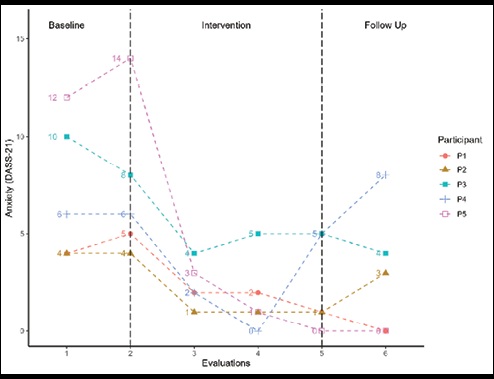
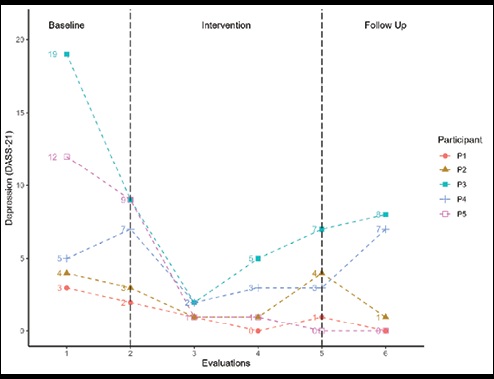
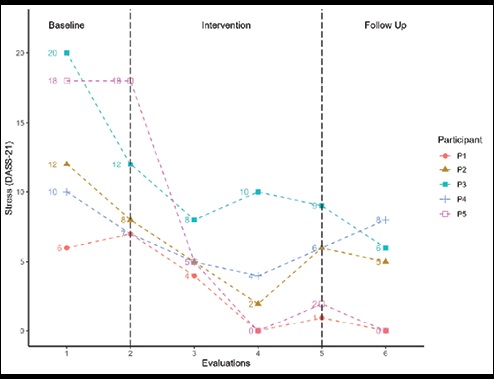
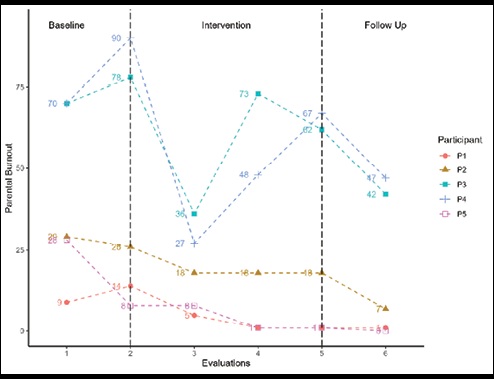
Participants included five women, all of whom reported being the mothers of children diagnosed with ADHD. Table 1 gives their sociodemographic characteristics, together with the results of the Nonoverlap of All Pairs (NAP) and Reliable Change Index (RCI) for each case. Figures 1, 2, 3, and 4 display the scores obtained by the participants for each variable across the assessments conducted during the study. Symptom severity classification was determined in accordance with the normative cutoff points of each instrument. The criteria laid down by Lovibond and Lovibond (1995) were used for DASS-21, and those established for the original scale (Roskam et al., 2018) were used for Parental Burnout.
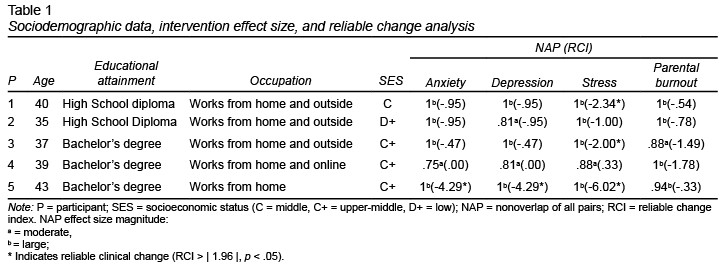
Following the intervention, Participant 1 showed decreases with large effect sizes (NAP = 1.00) across all evaluated variables, specifically achieving reliable clinical change in stress symptoms (RCI = -2.34; p < .05). She reported a greater ability to control her vocal tremors, together with improved communication skills.
Participant 2 demonstrated large effect sizes (NAP = 1.00) in anxiety, stress, and parental burnout, together with a moderate effect (NAP = .81) in depression. However, none of the variables achieved reliable clinical change. She also reported greater willingness to engage in self-care activities.
Participant 3 demonstrated large effect sizes (NAP = 1.00) in anxiety, depression, and stress, but only achieved reliable clinical change in stress (RCI = -2.00). A moderate effect was observed in parental burnout (NAP = .88). She described the experience as “very rewarding” and was grateful for the opportunity to participate in the study.
Participant 4 exhibited a large effect size in parental burnout (NAP = 1.00) and moderate effects in anxiety (NAP = .75), depression (NAP = .81), and stress (NAP = .88). None of the variables achieved reliable clinical change.
Participant 5, who was under pharmacological treatment for depression, demonstrated large effect sizes in anxiety (NAP = 1.00), depression (NAP = 1.00), stress (NAP = 1.00), and parental burnout (NAP = .94). Reliable clinical change was achieved in anxiety (RCI = -4.29), depression (RCI = -4.29), and stress (RCI = -6.02), but not parental burnout (RCI = -.33). In her feedback on the experience, she remarked, “I learned to become aware of my body, to breathe, and to relax in stressful situations; even in my daily life, I realized that I need to release tension in certain body parts that do not need to be constantly under strain.”
DISCUSSION AND CONCLUSION
This study is the first to evaluate an online TIY intervention for mothers acting as the primary caregivers of children diagnosed with ADHD in Mexico, demonstrating its feasibility as psychosocial support. The online format proved accessible and practical. A major strength is the zero dropout rate—all participants completed the eight sessions—and the absence of adverse events, contributing to the evidence on the psychological and physical safety of trauma-informed yoga interventions. This is particularly relevant given the recent literature evaluating a mindfulness-based intervention for a population with PB, using standard yoga resources, which reported the exacerbation of PB levels in certain participants (Bayot et al., 2024). This counterproductive effect was not observed with the TIY approach. Prioritizing psychological safety and personal agency through invitational language, fostering self-paced interoception, and maintaining constant freedom of choice regarding the physical poses are key elements when offering such resources to populations experiencing high and chronic stress. Providing mothers with safe spaces to exercise agency by enabling them to choose whether and how to engage in physical practices and breathing exercises—could counteract the experiences of coercion and inefficacy reported by individuals with high PB levels (Desimpelaere et al., 2025).
Regarding clinical outcomes, participants showed decreases in stress, anxiety, depression, and PB, with reliable clinical changes predominantly observed in stress reduction. From a trauma-informed perspective, this suggests TIY practice influences nervous system reactivity, helping regulate sympathetic hyperarousal and parasympathetic hypoarousal, typical consequences of chronic high stress. This premise is consistent with current literature on somatic techniques, which supports incorporating body-based approaches as complementary treatments in mental health care (Kuhfuß et al., 2021; Payne et al., 2015). Furthermore, by fostering non-judgmental observation and acceptance of the present experience, TIY may facilitate the development of self-compassion, a resource shown to act as a protective factor against PB in Latin American mothers (Buitron-Huillca& Manrique-Millones, 2025).
Participants 2 and 4 showed increased stress at follow-up (Assessments 5-6) compared to at the end of the intervention (Assessment 4), though levels remained below baseline (Figure 3). This likely reflects chronic ADHD caregiving stressors, suggesting that long-term maintenance of self-regulation practices may require booster sessions or participation in formal support systems.
Although decreases with large effect sizes were observed in the PB variable, it was the only variable in which reliable clinical change thresholds were not achieved. PB results from a chronic imbalance between parenting stressors and available coping resources (Mikolajczak and Roskam.,2018). Evidence indicates effective PB treatment requires approaches designed to decrease specific stressors (such as perfectionism and lack of co-parenting support) and increase resources through psychoeducation, effective parenting practices, and empathic support (Brianda et al., 2020). The TIY intervention evaluated fulfills the purpose of providing stress management resources, an element considered relevant in targeted interventions for PB, although it does not directly impact other dimensions of parental imbalance. TIY therefore constitutes a valuable resource that should be incorporated into a multimodal approach designed to address the various stressors associated with parenting.
Regarding study limitations, the AB within-subject design restricts control over external contextual variables that may have influenced participant symptomatology. The nature of the AB design therefore reduces the ability to establish causality. Furthermore, the number of evaluated replications (n = 5) and the two-month follow-up period limit the generalizability of findings to other populations.
Nevertheless, given the absence of previous reports on online TIY interventions targeting this population in the Mexican context, the choice of this design was justified by the need for a detailed evaluation of women caregivers’ responses to a novel care modality. As this was a feasibility phase, safeguarding the physical and psychological safety of participants through individual accompaniment was prioritized. This format allowed for the accurate monitoring of acceptability and feasibility, as well as the analysis of the trajectory of each case, which is often limited in group assessments.
An additional strength of the study was that a positive, consistent effect was observed across the five replications, regardless of the contextual, sociodemographic, and workload differences among the women caregivers. This finding demonstrates the robustness of the intervention, confirming its viability and potential for scalability in its original format. When evaluating behavioral interventions, demonstrating feasibility and preliminary efficacy is recommended before scaling up implementation (Bowen et al., 2009). To this end, using within-subject experimental designs with individual replications provides the requisite validity and methodological rigor (Kazdin, 2017).
The main conclusion from this within-subjects AB design is that TIY, adapted to an online modality, constitutes a safe, accepted, and efficient adjunct intervention to reduce the psychological distress typically experienced by caregivers of children with ADHD. Since Mexican mothers assume demanding caregiving routines (Díaz-Sánchez et al., 2024), the remote modality proved an accessible option. These findings indicate caregiver support should not be limited to psychoeducation or behavioral management of the child, and instead incorporate spaces promoting regulation, relaxation, and self-care.
Future research should prioritize group-based online formats to enhance cost-effectiveness and foster peer support, a recognized remedy for parental burnout. Follow-ups beyond two months should also be included to evaluate the long-term sustainability of the effects of TIY and the feasibility of the latter for male caregivers.